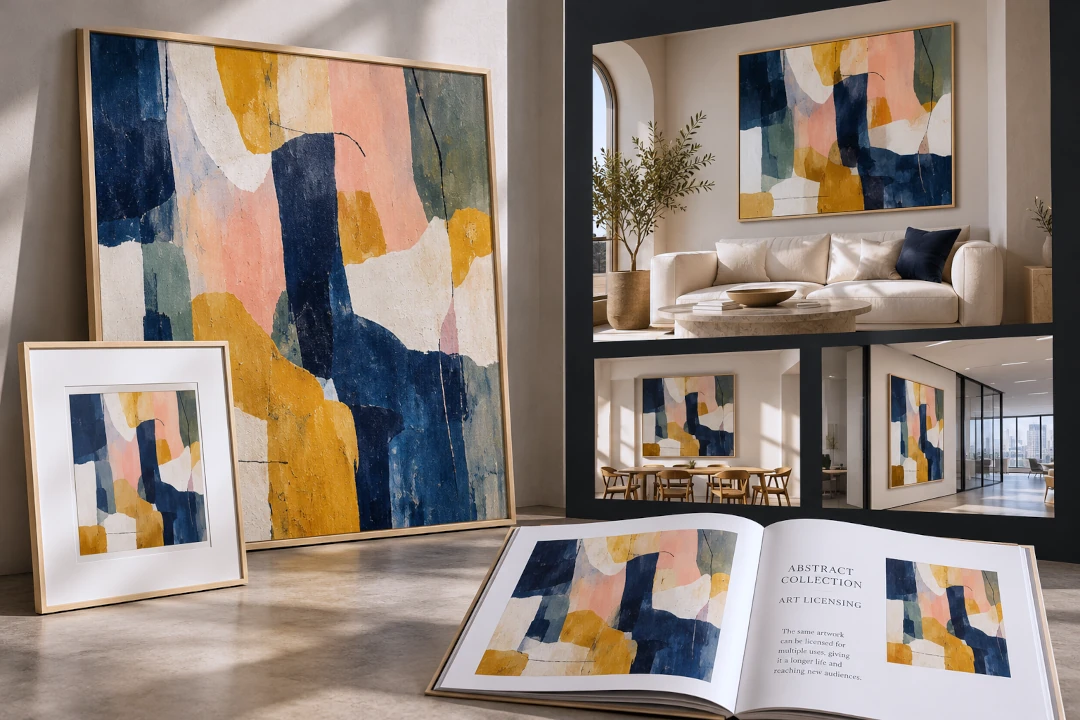
Art Licensing for Artists: How It Works and Where to Start
Selling an original artwork is not the only way an artist can earn from a piece. With art licensing, an artist can give a company permission to use artwork for a specific commercial purpose while usually retaining ownership of the underlying work.
Your art might appear on stationery, homeware, textiles, packaging, books, puzzles, gifts or other products. Instead of selling the original image itself, you are granting defined usage rights under an agreement.
For artists interested in creating additional income streams, licensing can open a very different path from selling originals or prints. But it also introduces new questions: What exactly are you licensing? Who owns the copyright? How are you paid? What should a licensing portfolio contain? And what should you check before signing an agreement?
What Is Art Licensing?
Art licensing is an arrangement in which an artist gives another party permission to use artwork under agreed conditions. Those conditions can define where the art may be used, on which products, in which territories and for how long.
The important distinction is that licensing does not automatically mean transferring ownership of your artwork or copyright. The exact rights depend on the agreement, which is why the wording matters.
1. Understand the Difference Between Selling Art and Licensing Art
When you sell a physical original, the buyer owns that physical object. That does not automatically mean the buyer owns the copyright or can reproduce the image commercially.
Licensing focuses on permission to use the image. A company might, for example, license one of your illustrations for a collection of notebooks while you continue to use the artwork elsewhere, depending on the terms you have agreed.
If your main goal is selling physical work rather than licensing images, see How to Sell Art Online.
2. Decide Whether Your Work Fits Licensing
Many visual styles can be licensed, including illustration, painting, photography, hand lettering, surface pattern design and digital artwork. What matters is whether your work can serve a useful visual purpose for a potential licensee and whether it fits the markets you want to approach.
Rather than trying to make work for every possible product, think about where your existing style naturally belongs. A playful illustrated collection may suit children's products or stationery, while botanical artwork might work well across homeware, paper goods or textiles.
3. Think in Collections, Not Only Individual Images
A single strong artwork can attract attention, but a coordinated collection can make it easier for a company to imagine how your work might extend across several products.
A collection might include a main design, complementary artworks, patterns, motifs or coordinated colour variations. The exact structure depends on your medium and the type of licensing work you want.
4. Build a Focused Art Licensing Portfolio
Your licensing portfolio does not need to contain everything you have created. Select work that represents the style and commercial direction you want to license.
Organise related pieces together and make the presentation easy to scan. If you work across several distinct styles, separate them clearly rather than mixing everything into one long sequence.
For broader portfolio principles, read How to Make an Art Portfolio.
5. Show How the Artwork Could Be Used
Potential licensees often need to imagine an image beyond the flat artwork file. Showing selected examples of how a design might translate to a product can make a portfolio easier to understand.
Keep these visualisations relevant. If you want to license artwork for wall decor, for example, showing the work professionally presented in interiors can help communicate how it could look in context.
Present Your Artwork in Context
InsituArtRoom helps artists place artwork in realistic interiors and create polished presentation images without organising a separate photo shoot. Start with 9 free interiors and use contextual visuals across portfolios, websites and promotional material.
Create an Art Mockup6. Research the Markets You Want to Enter
Art licensing covers many industries. Before approaching companies, look closely at the products they already sell, their visual direction, customer base and the kinds of artists or designers they work with.
A targeted approach is usually more useful than sending the same portfolio everywhere. Your work should make sense for the company you are contacting.
7. Look for Companies That License Artwork
Potential opportunities can come from manufacturers, publishers, product companies, licensing agencies and brands that work with independent artists.
Industry trade shows, portfolio directories, professional networks and direct research can also help you identify relevant contacts. Before submitting work, check whether a company publishes submission guidelines and follow them carefully.
8. Make Your Website Licensing-Friendly
If licensing is an important goal, make it easy for an art director or potential partner to understand your work and contact you.
Your website can include selected collections, a short introduction to your licensing work and clear contact information. You do not necessarily need to make every high-resolution licensing file publicly downloadable.
See Artist Website: What Every Artist Website Should Include for the wider structure.
9. Make Your Contact Information Easy to Find
A licensing opportunity can disappear quickly if someone cannot work out how to reach you. Include a professional contact method on your website and portfolio.
10. Understand Royalties
Some licensing agreements pay the artist a royalty based on sales of products using the artwork. Other arrangements may use a flat fee, an advance, a combination of payments or another structure.
There is no single payment model that applies to every licensing deal. Before agreeing, understand how payment is calculated, when it is reported and when it is paid.
11. Understand Advances and Flat Fees
An advance is generally an upfront payment associated with expected future royalties, while a flat-fee arrangement pays an agreed amount for the licensed use rather than an ongoing percentage.
The details matter more than the label. Check what rights the payment covers and whether additional compensation can become due.
12. Pay Attention to Exclusivity
An agreement may be exclusive or non-exclusive. Exclusivity can restrict your ability to license the same artwork elsewhere, sometimes within a particular product category, territory or period.
Do not assume that “exclusive” has the same practical meaning in every contract. Read exactly what is restricted.
13. Check the Territory
Licensing rights may apply in one country, a group of countries or worldwide. Territory can affect the commercial value of the agreement and your ability to make other deals.
14. Check the Length of the Agreement
A licensing agreement should make clear how long the permission lasts and what happens when that period ends.
Consider whether renewal is automatic, optional or subject to a new agreement, and whether there is a defined period for remaining stock to be sold after the licence ends.
15. Define the Products and Uses Clearly
“Use my artwork” is far too broad for a professional licensing arrangement. The agreement should identify the permitted uses with enough clarity for both sides to understand the scope.
For example, rights for greeting cards are different from unrestricted rights across every type of consumer product.
16. Understand Copyright Before You Sign
Copyright and licensing are closely connected. A licence normally grants permission to use copyrighted work under defined terms, while an assignment of copyright can transfer ownership of rights.
Because legal rules vary by jurisdiction and contracts can have significant consequences, consider obtaining qualified legal advice when you are unsure about the rights a proposed agreement asks you to grant.
17. Keep Your Production Files Organised
Licensing can involve older artwork being requested months or years after it was created. Maintain organised master files, useful filenames and records of which versions belong to each collection.
Keep production-ready files separate from the smaller images used for web portfolios and initial submissions.
18. Track Where Your Artwork Is Licensed
Keep a record of agreements, artworks, licensees, product categories, territories, start and end dates, exclusivity and payment terms. This becomes especially important if the same artwork is available for different non-competing uses.
19. Present Yourself Consistently
Your portfolio, website, social profiles and communications should make it easy to recognise your visual identity. Consistency does not mean every image needs to look identical; it means the overall body of work feels intentional.
For broader visibility strategies, see Art Marketing for Artists.
20. Use Social Media to Support Licensing
Social media can help art directors and brands discover your work, especially when you consistently share finished collections and show how your visual style develops. Give interested people a clear path to your website or licensing contact information.
21. Keep Creating New Work
A licensing portfolio becomes stronger when it continues to grow. New collections give you more reasons to contact potential partners and more opportunities to respond to different product categories or seasonal needs.
22. Be Selective About Opportunities
Not every licensing offer is automatically a good opportunity. Consider the company, products, quality, audience, payment structure, rights requested and how the collaboration fits your artistic brand.
A deal that restricts valuable rights for a long period may deserve more scrutiny than one with a narrowly defined use.
A Simple Art Licensing Workflow
- Define the type of artwork you want to license.
- Organise strong work into focused collections.
- Create a professional portfolio and website.
- Research suitable companies and markets.
- Follow relevant submission guidelines.
- Discuss the intended products and usage.
- Review payment, territory, duration and exclusivity.
- Clarify copyright and all rights being granted.
- Sign an agreement before supplying final production files.
- Deliver the agreed files and keep accurate records.
- Track the licence, payments and expiry date.
Questions to Ask Before Licensing Your Art
- Which artwork is being licensed?
- Which products or uses are covered?
- Is the licence exclusive or non-exclusive?
- Which territories are included?
- How long does the agreement last?
- How and when will I be paid?
- What reporting will I receive?
- Can the artwork be altered?
- Who approves the final product?
- What happens when the licence ends?
- Am I licensing usage rights or being asked to transfer copyright?
Common Art Licensing Mistakes
- Sending the same unfocused portfolio to every company.
- Not researching whether your style fits the brand.
- Agreeing to broad rights without understanding them.
- Ignoring exclusivity, territory or duration.
- Supplying production files before the arrangement is clear.
- Failing to keep records of existing licences.
- Making contact information difficult to find.
- Assuming every licensing deal uses the same royalty structure.
Make Your Licensing Portfolio More Visual
Show selected artwork in realistic interiors and create professional presentation images with InsituArtRoom. Contextual visuals can help potential partners see how your work could live beyond a flat artwork file.
Try InsituArtRoomFinal Thoughts
Art licensing can give artists a way to earn from their visual work without relying only on selling originals. It can also introduce your art to new audiences through products and collaborations.
The strongest starting point is understanding what you want to license, building a focused portfolio, researching companies that genuinely fit your work and learning to evaluate the rights you are being asked to grant.
Present your artwork professionally, keep your files and agreements organised, and treat licensing as a business relationship as well as a creative opportunity.