Art Commissions: A Practical Guide for Artists
Art commissions can give artists another way to earn from their work while creating something specifically for a client. But custom artwork also introduces questions that do not exist when someone buys a finished piece: What exactly is the client requesting? How much should you charge? When should payment happen? How many changes are included? And how can you make sure both sides understand the final result?
A clear commission process protects your time, gives the client more confidence and makes the experience feel professional from the first enquiry to delivery.
This guide covers the practical side of getting and managing art commissions, including pricing, briefs, deposits, revisions, presentation, promotion and ways to help clients visualise commissioned wall art before it is finished.
What Is an Art Commission?
An art commission is artwork created in response to a client's specific request. The client may ask for a particular size, subject, colour palette, style or other agreed characteristics.
Some artists create highly personalised work, while others accept commissions only within their established artistic style. You decide how much customisation fits your practice.
1. Decide What Kind of Commissions You Accept
Before advertising commissions, define your boundaries. Consider which media, subjects, sizes and levels of customisation you are comfortable offering.
You might accept requests for:
- Original paintings in a specific size.
- Portraits.
- Pet portraits.
- Illustrations.
- Abstract works based on a chosen palette.
- Artwork designed for a particular interior.
- Variations inspired by your existing body of work.
Being clear about what you do not offer is equally useful. A commission should still feel like your work.
2. Show Examples of Relevant Work
Potential clients need evidence that your style matches what they have in mind. Your portfolio should make that easy to judge.
If you already have commissioned pieces you are allowed to show, include selected examples. Otherwise, existing work in a similar style can demonstrate what a client can reasonably expect.
See How to Make an Art Portfolio for ways to present your work professionally.
3. Make It Obvious That You Accept Commissions
People cannot enquire about a service they do not know you offer. Mention commissions clearly on your website, portfolio or relevant social profiles.
You can also periodically show previous commissions, works in progress or examples of custom options through social content.
For broader promotion ideas, see Art Marketing for Artists.
4. Create a Clear Commission Brief
Before agreeing to the project, collect the information needed to understand the request. Depending on your work, this could include dimensions, orientation, preferred colours, subject, reference material, intended location and deadline.
If the artwork is intended for a particular wall, ask for useful information about the space. This can help you understand the scale and context rather than discussing the artwork in isolation.
5. Avoid Starting With a Vague Agreement
Statements such as “something blue for my living room” can mean very different things to different people. Clarify the elements that matter before work begins.
A written summary of the agreed commission gives both artist and client something concrete to refer back to later.
6. Price Custom Artwork Carefully
A commission often requires more communication and administration than selling an existing piece. Your price should reflect not only materials and production time but also the additional work involved in creating something to an agreed brief.
Factors may include size, medium, complexity, materials, framing, shipping, research and the amount of customisation required.
Your commission pricing should also make sense alongside the prices of your existing work. For a broader framework, see How to Price Your Artwork.
7. Agree on Payment Before Starting
Do not leave payment expectations until the artwork is finished. Decide how your commission payments work and communicate this before accepting the project.
Many artists use an upfront deposit or staged payments, but the exact structure is your business decision. Whatever you choose, make the amount, timing and any relevant refund terms clear in writing.
8. Define the Revision Process
One of the easiest ways for a commission to expand beyond its original scope is unlimited changes.
Explain when feedback is possible and what kind of changes can reasonably be made at each stage. If additional revisions involve extra work, establish how they will be handled before the project begins.
9. Give Clients a Sense of Scale
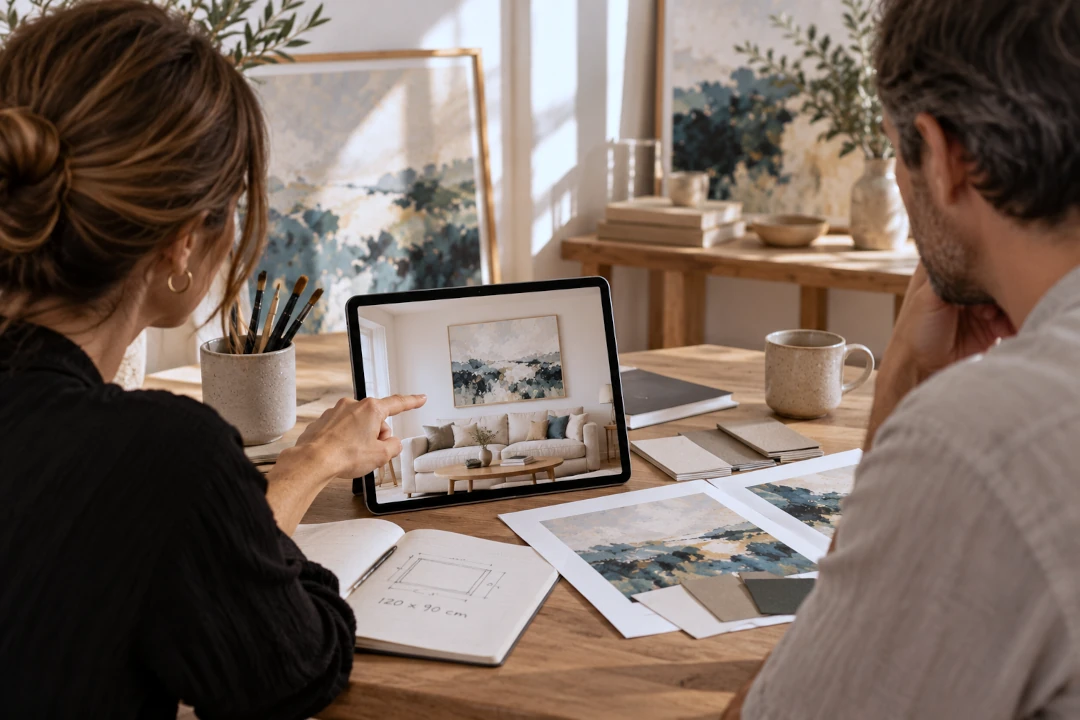
For wall art, size can be surprisingly difficult to imagine from measurements alone. A client may know that a painting will be 100 × 70 cm but still struggle to picture what that means above a sofa or on a large empty wall.
This is where visual context can make the commission process easier.
10. Preview Commissioned Art in an Interior
With InsituArtRoom, you can place an artwork or visual concept into a realistic interior and adjust its size and position. This can help communicate scale and presentation more clearly than dimensions alone.
You can start with 9 free interiors, while Premium gives you access to the wider interior collection when you need more options for different spaces and styles.
For artists creating wall-based commissions, a mockup can be particularly useful when discussing how a finished piece might relate to an interior.
Help Clients Visualise Commissioned Artwork
Use InsituArtRoom to present artwork in realistic interiors, explore scale and create polished visuals for client discussions or your commission portfolio. Start with 9 free interiors and access the wider collection with Premium.
Try InsituArtRoom11. Be Clear About What a Preview Represents
A digital mockup is a presentation tool, not a guarantee that every colour or physical detail will appear exactly the same in real life. Screens, lighting and materials can all affect appearance.
Use previews to communicate scale, placement and overall visual direction while keeping expectations realistic.
12. Communicate at Agreed Stages
Clients often feel more comfortable when they know what happens next. Establish useful checkpoints rather than sending constant updates or disappearing until the work is finished.
The appropriate stages depend on your process. The important part is that both sides know when feedback is expected and when the project moves forward.
13. Protect Your Artistic Style
A commission does not have to mean giving up creative control. Clients are usually approaching you because they already respond to your work.
Explain what can be customised and what remains part of your artistic decision-making. This helps prevent a project from gradually becoming something unrelated to the work you normally create.
14. Photograph the Finished Commission Properly
Before the artwork leaves your studio, document it well. High-quality photographs can become part of your portfolio and future marketing, provided you have the right to share the work.
See How to Photograph Artwork.
15. Turn Completed Commissions Into Marketing Content
A finished commission can demonstrate your process to future clients. You might show the completed artwork, selected details, a studio view, an interior mockup or a short Reel.
InsituArtRoom can also create vertical Reels from artwork displayed in interiors using effects including Zoom In, Zoom Out and Bird's Eye, giving you another way to present completed work online.
16. Ask Before Sharing Personal Commission Details
Some commissions involve private photographs, homes, family members or personal stories. Do not assume that a client wants those details published.
Ask permission before using identifiable client material or private information in your portfolio or social media.
17. Make Delivery Part of the Plan
For physical artwork, agree on delivery or shipping expectations before the work is complete. Consider packaging, framing, insurance where appropriate and the practical challenges of shipping larger pieces.
Clear delivery information prevents the final stage of a successful commission from becoming unnecessarily confusing.
18. Include Documentation When Appropriate
Original commissioned artwork can be accompanied by useful documentation such as the artwork title, medium, dimensions, date and artist information.
You may also choose to provide a certificate of authenticity. See Certificate of Authenticity for Artwork.
19. Use Finished Commissions to Attract Similar Clients
If you enjoyed a particular type of commission, show it prominently. The work you market influences the enquiries you receive.
For example, if you want more large abstract commissions for interiors, make sure potential clients can actually see examples of large abstract work presented in interiors.
20. Know When to Decline a Commission
Not every enquiry is a good fit. A project may fall outside your style, require an unrealistic deadline, have an unsuitable budget or involve expectations you cannot meet.
Declining the wrong project can protect time for work that better fits your practice.
A Simple Art Commission Process
- Receive the enquiry.
- Check whether the project fits your practice.
- Collect the commission brief.
- Confirm size, medium, scope and deadline.
- Provide the price and payment terms.
- Confirm revision boundaries.
- Put the agreement in writing.
- Receive the agreed initial payment.
- Create the artwork using agreed checkpoints.
- Present the finished work clearly.
- Collect any remaining payment according to your agreement.
- Document, package and deliver the artwork.
What Should an Art Commission Agreement Cover?
The exact document will depend on your business and local requirements, but practical points often include the agreed artwork, dimensions, medium, price, payment schedule, timeline, revisions, delivery arrangements and relevant cancellation terms.
If rights of reproduction or commercial use matter to the project, those should also be addressed explicitly rather than assumed.
Common Art Commission Mistakes
- Starting before the brief is clear.
- Not agreeing on payment terms in advance.
- Allowing unlimited revisions.
- Accepting work far outside your normal style.
- Failing to clarify dimensions and scale.
- Not putting the agreement in writing.
- Forgetting to photograph the finished work.
- Sharing private client material without permission.
- Leaving shipping or delivery decisions until the end.
- Trying to accept every commission enquiry.
Present Your Commission Work More Professionally
InsituArtRoom helps artists show artwork in realistic interiors, communicate scale, create portfolio-ready mockups and turn finished work into visual content for future promotion.
Create an Art MockupFinal Thoughts
Art commissions can be rewarding for both artist and client when expectations are clear from the beginning. Define what you offer, price the additional work involved, agree on communication and revisions, and make the process easy for the client to understand.
For wall art in particular, professional visual presentation can also make abstract decisions about size and placement much easier to discuss.
A strong commission process does more than help one project run smoothly. Each successful commission can strengthen your portfolio, generate future referrals and help the next potential client understand exactly why they should work with you.