Art Marketing for Artists: A Practical Guide to Getting Your Work Seen
Creating good art and getting people to discover it are two different jobs. You can produce work you are proud of and still struggle to reach collectors, followers or potential customers if nobody knows it exists.
That is where art marketing for artists becomes important. Marketing does not mean turning every post into an advertisement or changing your work to follow trends. It means making it easier for the right people to discover your art, understand it, remember it and take the next step when they are interested.
This guide brings the main parts of an artist marketing strategy together: positioning, presentation, websites, search, social media, mockups, Reels, email, selling and measuring what actually works.
What Is Art Marketing?
Art marketing is the process of presenting and promoting your work so that more of the right people can discover it and connect with it. Your portfolio, website, Instagram account, exhibition announcements, mailing list, online shop, artwork descriptions and even the way you photograph your work can all be part of your marketing.
The goal is not simply attention. Good artist marketing helps turn attention into meaningful actions such as visiting your portfolio, following your work, joining your mailing list, enquiring about a piece or making a purchase.
1. Know What You Want Your Marketing to Achieve
Before choosing tactics, decide what result matters most right now. Your goal might be to get discovered, grow a relevant audience, drive visitors to your portfolio, sell originals or prints, find commission clients, promote an exhibition or build relationships with collectors and galleries.
Choose one or two priorities rather than trying to optimise everything at once.
2. Make Your Artistic Identity Easy to Understand
People do not need to put your work into a rigid category, but they should gradually understand what makes your practice distinctive. Your visual work, artist bio, captions, website and portfolio should reinforce a recognisable picture of who you are as an artist.
If your biography needs work, see How to Write an Artist Bio.
3. Build a Strong Home for Your Work Online
Social platforms are useful for discovery, but they should not be the only place where your work exists. A portfolio or website gives you a stable destination you control. It should make it easy to see your strongest work, learn about you, understand whether pieces are available and know how to contact or buy from you.
See How to Make an Art Portfolio.
4. Improve the Way Your Artwork Looks Online
Presentation is part of marketing. Start with accurate, high-quality photographs, then create additional visual material that gives the work context.
See How to Photograph Artwork and How to Make Your Art Look Professional Online.
5. Use Art Mockups to Add Context
A photograph shows the artwork itself. A realistic room mockup helps viewers imagine what it could look like in a home, office or other interior.
With InsituArtRoom, you can upload your artwork, place it in realistic interiors, adjust its size and position, and experiment with frames and mats. You can start with 9 free interiors, while Premium provides access to the wider interior collection.
These images can be reused across social posts, portfolio pages, online shops, marketplace listings, newsletters and promotional campaigns.
Turn One Artwork Into More Marketing Content
Create realistic room mockups, framed presentations and social-ready visuals with InsituArtRoom. Start with 9 free interiors and use the wider Premium collection when you need more variety for ongoing promotion.
Try InsituArtRoom6. Show Your Art in More Than One Way
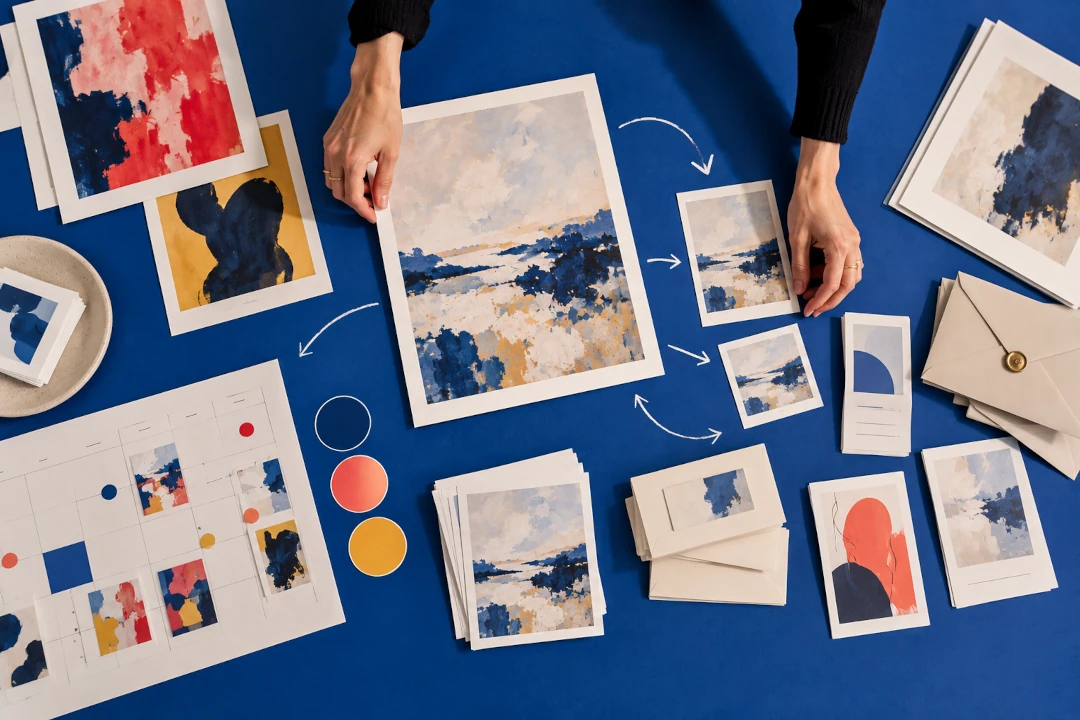
One artwork can become a clean full image, close-up detail, studio photograph, realistic interior mockup, framed version, carousel, Reel, Story and AR preview. This lets you promote the same artwork several times without publishing the same post repeatedly.
7. Choose Marketing Channels You Can Maintain
You do not need to be everywhere. Choose channels based on what you create, where your potential audience spends time and what you can realistically maintain. Your mix might include your website, Instagram, Pinterest, an online marketplace, email and occasional exhibitions or events.
8. Use Instagram for Discovery and Relationship Building
Instagram combines artwork presentation, short-form video, Stories and direct interaction. Mix finished work with details, process, studio moments, context and useful information about your practice.
See Instagram for Artists. If your priority is converting interest into purchases, read How to Sell Art on Instagram.
9. Add Reels to Your Art Marketing
Video gives you another way to introduce your work. InsituArtRoom can create vertical Reels from artwork presented in interiors using effects including Zoom In, Zoom Out and Bird's Eye, turning a mockup into another promotional asset.
See How to Make Art Reels for Instagram.
10. Write for People, Not Just Algorithms
Captions and artwork descriptions help viewers understand what they are seeing. Tell people something they cannot learn from the image alone: the idea behind the work, process, materials or story of the series. When a work is available, include practical information needed to move closer to a purchase.
See How to Write an Artwork Description.
11. Make Your Artwork Discoverable Through Search
Social posts move quickly. Searchable website content can continue attracting people long after publication. Use clear page titles, descriptive text, meaningful image alt text and specific artwork information. If you write blog content, focus on questions and problems that genuinely matter to the audience you want to reach.
12. Use Pinterest as a Long-Term Visual Discovery Channel
Pinterest works differently from a fast-moving feed. Artists can create pins from artwork images, room mockups, collection pages and blog content, then link them to useful destinations on their own website.
13. Build an Email List You Control
An email list gives you a direct relationship with people who have chosen to hear from you. Useful reasons to contact subscribers include a new collection, exhibition, studio update, available work or print release.
14. Market New Collections Before They Launch
Do not wait until a collection is available before mentioning it. Share details, process, studio views, individual pieces, contextual mockups and short previews so interested followers already know something about the collection by launch day.
15. Use Social Proof Without Letting It Take Over
Exhibitions, press coverage, collector photographs, testimonials and sold work can reassure new buyers. Use these signals naturally while keeping the art at the centre.
16. Make Buying or Enquiring Simple
Marketing loses value if someone becomes interested and cannot work out what to do next. Provide a clear route to purchase or enquire, and keep titles, dimensions, prices and availability consistent.
See How to Sell Art Online and How to Get More Art Buyers.
17. Use AR When a Buyer Needs More Confidence
InsituArtRoom's View in your room feature lets viewers preview artwork on a real wall using AR. This can help when a potential buyer is considering size, placement or how a work might fit into their own space.
Learn more in Augmented Reality for Artists.
18. Collaborate With Relevant Artists and Accounts
Collaborations can introduce your work to people who already care about related subjects. Look for partnerships that make sense creatively: other artists, exhibitions, designers, galleries, art communities or relevant publications.
19. Repurpose Instead of Constantly Creating From Scratch
A single painting might provide the original image, detail crops, interior mockups, a Reel, Story sequence, email feature and portfolio update. Build a system in which one piece of work creates several useful marketing assets.
20. Measure What Actually Brings Results
Do not judge marketing only by likes. Depending on your goals, useful signals include website visits, portfolio views, profile visits, saves, shares, email sign-ups, artwork enquiries and sales.
If a channel creates plenty of activity but never produces the actions you care about, reconsider how much time you give it.
Art Marketing on a Small Budget
You do not need a large advertising budget to start. Focus first on assets and channels that can continue working for you: strong photography, a clear portfolio, useful website pages, consistent social content, email and reusable mockups. Paid promotion can be tested later.
Do Artists Need Personal Branding?
Artists benefit from recognisability, but personal branding does not mean turning yourself into a manufactured personality. Think instead about consistency in how your work is photographed, how you describe your practice and the ideas people begin to associate with your art.
A Simple Art Marketing Plan for Artists
- Choose one primary marketing goal.
- Define the audience most likely to care about your work.
- Make sure your portfolio or website is ready for visitors.
- Photograph your artwork professionally.
- Create additional mockups and contextual images.
- Choose one or two main discovery channels.
- Publish consistently without making every post promotional.
- Turn selected artwork into Reels and other formats.
- Build an email list.
- Make purchase and enquiry routes obvious.
- Track which channels generate meaningful actions.
- Repeat what works and reduce what does not.
Common Art Marketing Mistakes
- Trying to use every platform at once.
- Posting only when you have something to sell.
- Using weak artwork photographs.
- Making every caption promotional.
- Showing the same artwork in exactly the same way repeatedly.
- Sending traffic to an unfinished portfolio.
- Making prices, availability or contact information difficult to find.
- Focusing on follower count instead of relevant engagement and buyer interest.
- Depending entirely on a social platform you do not control.
Create More Marketing Content From the Art You Already Have
InsituArtRoom helps artists turn existing artwork into realistic interior mockups, framed presentations and vertical Reels, while AR can help interested viewers visualise a piece on their own wall. Start with 9 free interiors and move to the wider Premium collection when you need more variety.
Explore InsituArtRoomFinal Thoughts
Effective art marketing is not about shouting louder. It is about making your work easier to discover, easier to understand and easier to act on.
Build a strong home for your art, present each piece professionally, choose a manageable set of channels and create several useful pieces of content from the artwork you already produce. Then pay attention to which activities lead to real visits, enquiries and sales.
Over time, that creates something more valuable than a single viral post: a repeatable marketing system that keeps introducing your work to new people.