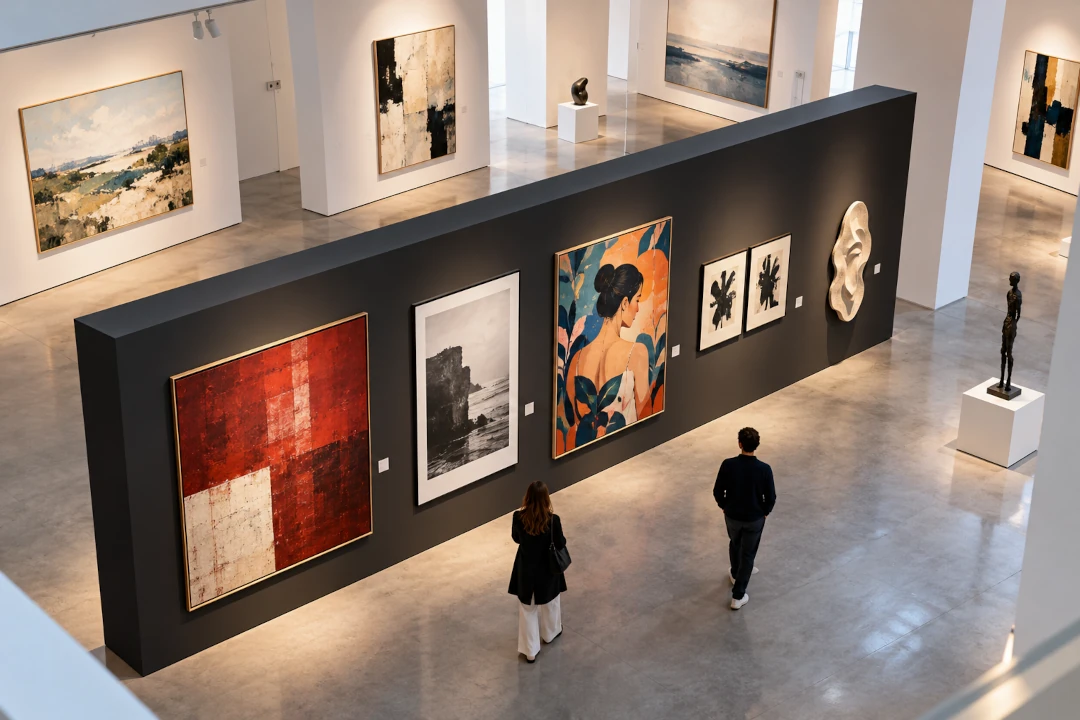
How to Display Art Online: 12 Ways to Showcase Your Artwork
Creating the artwork is only one part of building an audience for it. If people discover your work online, the way you display it can influence whether they stop, explore more, follow you or consider buying.
Learning how to display art online means finding the right combination of clear artwork images, context, storytelling and places where your work can be discovered. You do not need to use every platform or presentation format. Instead, choose a few that work together and make your art easy to see and understand.
Here are 12 practical ways to showcase your artwork online, from a simple portfolio to room mockups, video and augmented reality.
1. Build an Online Art Portfolio
An online portfolio gives your work a permanent home that you control. Unlike a social media feed, it allows visitors to browse selected pieces without unrelated posts or changing algorithms getting in the way.
Choose your strongest work rather than uploading everything you have ever created. Group related pieces when it helps viewers understand a collection, series or direction in your practice.
For each artwork, include useful information such as the title, medium, dimensions and year. If the work is available for sale, make the next step clear.
See our complete guide to how to make an art portfolio.
2. Display Art on Your Own Website
Your own website can bring together your portfolio, artist bio, exhibitions, contact information and sales links in one place. Keep the navigation simple and make the artwork easy to find. Large, clear images usually serve art better than pages crowded with decorative graphics.
Individual artwork pages can also give search engines more context than a gallery page containing dozens of images with very little information.
3. Use Clean Images of the Artwork
Before showing artwork in rooms or videos, give viewers a clear view of the work itself. A clean photograph or digital image helps them see colour, composition and detail without distractions.
For physical artwork, use even lighting, photograph the piece straight on and avoid reflections or strong colour casts. Keep a high-quality master image so you can prepare different versions for your website, social media and sales channels.
If you need help with this step, read How to Photograph Artwork.
4. Show Your Artwork in Realistic Interiors
A clean artwork image shows the piece itself. An interior mockup answers a different question: What could this look like on a wall?
Room mockups give viewers context for scale, style and placement. They can be especially useful for paintings, photography, illustrations and art prints sold online.
With InsituArtRoom, you can upload your artwork, place it in realistic interiors, adjust its size and position, and experiment with frames and mats. You can start with 9 free interiors, while Premium provides access to the wider interior collection.
This lets you create professional presentation images without physically staging and photographing every artwork in multiple rooms.
See Your Art in a New Setting
Upload your artwork to InsituArtRoom and create realistic room presentations for your website, portfolio, shop and social media. Start with 9 free interiors.
Try InsituArtRoom5. Use Different Interiors for Different Artworks
Displaying every piece in exactly the same room can make your online presentation feel repetitive. Different artworks may also benefit from different surroundings.
A bold contemporary painting might work well in a clean modern space, while another piece may suit a darker or more traditional setting. The room should support the artwork rather than compete with it.
Choose interiors strategically and keep the scale believable. Explore our guides to living room wall art mockups, office wall art mockups and dining room wall art mockups.
6. Display Art on Instagram
Instagram gives you several ways to showcase the same artwork without simply reposting the same image. You might publish a clean image first, then show a detail, a room mockup, a studio photograph, a carousel explaining the piece or a Reel showing the artwork in context.
This gives followers multiple opportunities to notice the work and learn something about it while keeping your content varied. Our Instagram for Artists guide covers the platform in more detail.
7. Turn Your Artwork Into Reels
Static artwork can also become short-form video content. Movement can help a piece stand out in a feed and gives you another way to reuse existing artwork.
InsituArtRoom lets you create vertical Reels from artwork presentations using effects including Zoom In, Zoom Out and Bird's Eye.
See How to Make Art Reels for Instagram for practical ideas.
8. Let Viewers Preview Art on Their Own Wall
Room mockups show artwork in a prepared interior. Augmented reality can make the experience more personal by helping someone visualise a piece in their own space.
With InsituArtRoom's View in your room feature, viewers can preview artwork on a real wall using AR. This can be useful when someone is considering placement, size or whether a piece suits their home.
Learn more in our guide to augmented reality for artists.
9. Showcase Art on Online Marketplaces
Online marketplaces can put your work in front of people who are already browsing for art. The challenge is that your artwork may appear alongside many other pieces, making presentation particularly important.
Use clear main images, accurate information and additional visuals that help buyers understand the work. If you sell wall art or prints, a realistic interior image can provide useful scale and context alongside the clean product image.
If you are deciding where to list your work, see Where to Sell Art Online.
10. Create Online Collections or Virtual Exhibitions
Instead of displaying every artwork as an isolated item, group related pieces into an online collection or exhibition. This can help viewers understand relationships between works and spend more time exploring a series.
Add a short introduction explaining the idea behind the collection and arrange the pieces in a deliberate order. Virtual presentation can also extend a physical exhibition by allowing people who cannot visit in person to discover the work online.
11. Add the Story Behind the Artwork
Images attract attention, but information gives the artwork context. A short description can explain the inspiration, process or idea behind a piece without telling the viewer exactly what they should feel.
Include factual information first, then add a concise story when it contributes something meaningful. Our guide to writing an artwork description can help you structure this information.
12. Show the Artist Behind the Work
Your online presence does not have to consist entirely of finished artwork. Studio photographs, works in progress and occasional images of you working can help viewers understand that there is a person and a process behind the finished piece.
Your artist bio should also be easy to find. See How to Write an Artist Bio for guidance.
What Is the Best Way to Display Art Online?
There is no single format that works best in every situation. The strongest online presentation usually combines several types of content, with each one doing a different job.
- Clean artwork image: shows the work accurately.
- Detail image: reveals texture or smaller elements.
- Room mockup: gives scale and interior context.
- Reel: turns the artwork into moving social content.
- AR preview: helps viewers imagine it in their own space.
- Description: provides facts and meaning.
- Portfolio or website: gives visitors somewhere to explore more of your work.
How to Display Art Online if You Want to Sell It
When artwork is for sale, presentation needs to answer practical buyer questions as well as create visual interest. Make the dimensions, medium, framing status, price or purchasing process easy to understand.
Then use contextual presentation to help buyers imagine ownership. A realistic mockup can demonstrate scale, while AR can help someone test the artwork on their own wall.
For the wider sales process, read How to Sell Art Online and How to Sell Art Prints Online.
How Many Images Should You Show for One Artwork?
There is no fixed number. Use enough images to answer important questions without adding repetitive visuals. A useful set might include a clean front view, one or two detail images and one or more contextual views.
Keep Scale and Perspective Realistic
Online presentation should make artwork easier to understand, not create a misleading impression. If you use room mockups, pay attention to both scale and perspective.
Our guide to artwork perspective and scale explains why these details matter.
Keep Your Online Art Presentation Consistent
Your website, portfolio, social media and sales pages do not need to look identical, but they should feel connected. Use accurate artwork information everywhere and maintain a recognisable level of image quality.
For a deeper guide, see How to Make Your Art Look Professional Online.
One Artwork Can Become Multiple Pieces of Content
Displaying art online does not mean creating something new every day. One finished artwork can provide material for many different formats.
- Photograph the artwork.
- Publish a clean portfolio image.
- Create a room mockup.
- Try another interior or frame.
- Share a close-up detail.
- Create a Reel.
- Write about the story behind the piece.
- Let viewers preview it with AR.
This approach gives the artwork more opportunities to be discovered while reducing the pressure to constantly produce entirely new promotional content.
Turn One Artwork Into More Ways to Be Seen
Use InsituArtRoom to place your art in realistic interiors, experiment with framing, create vertical Reels and let viewers visualise the artwork on their own walls. Start with 9 free interiors.
Explore InsituArtRoomCommon Mistakes When Displaying Art Online
- Uploading dark, blurry or distorted artwork photographs.
- Showing only a room mockup without a clear image of the actual artwork.
- Using unrealistic scale in interior presentations.
- Choosing backgrounds that compete with the artwork.
- Using exactly the same presentation for every piece.
- Leaving out dimensions, medium or other essential information.
- Posting only promotional content without giving viewers context or a story.
- Making it difficult to find your portfolio, contact details or purchasing information.
Final Thoughts
The best way to display art online is to show the work clearly first and then add context. A clean photograph lets viewers study the artwork, while mockups, Reels, descriptions and AR help them understand it from different perspectives.
You do not need to be everywhere. Build a simple system in which your website or portfolio provides a strong home for the work, your social channels help people discover it, and professional presentation tools help viewers imagine what it could look like beyond the screen.