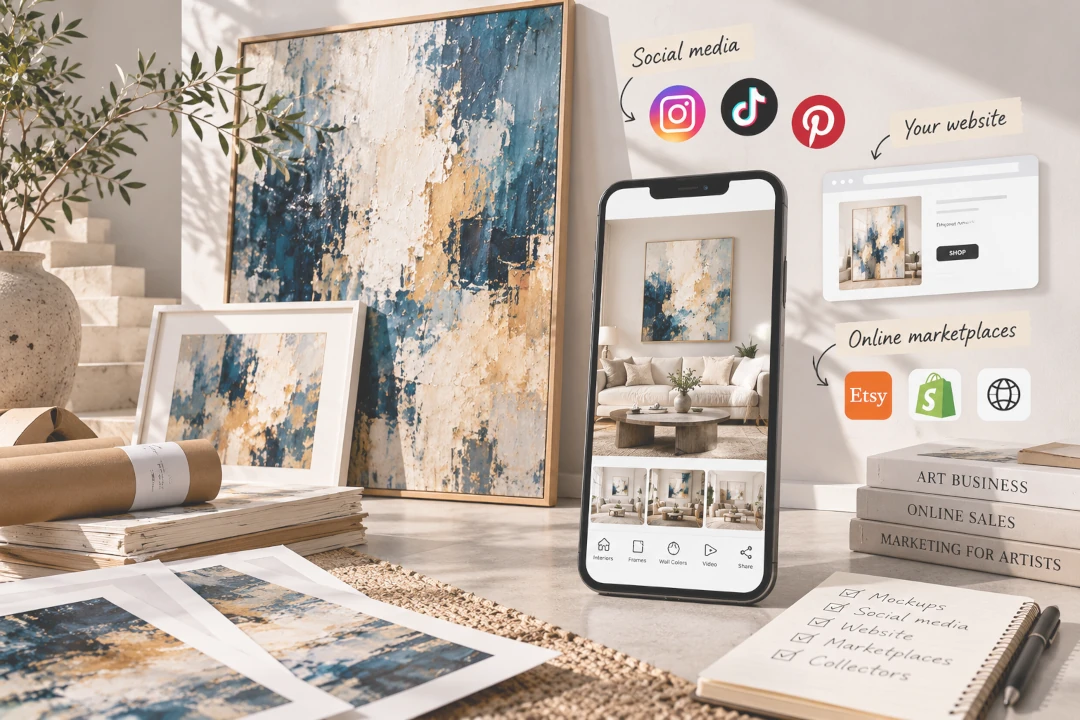
How to Sell Art Without a Gallery
You do not need gallery representation to build an audience and sell your artwork. Today, artists can reach collectors directly through their own websites, social media, online marketplaces, exhibitions and personal networks.
The advantage is control. You decide how your work is presented, how you communicate with buyers and where you sell. The challenge is that you also take responsibility for the jobs a gallery might otherwise help with: presentation, promotion, trust, enquiries and sales.
If you want to sell art without a gallery, the goal is not simply to put your work online. You need to create a professional path from discovering your art to feeling confident enough to buy it.
1. Build a Professional Online Presence
Your online presence becomes your gallery. A potential collector should be able to discover your work, understand who you are and find out how to buy or contact you without searching through multiple platforms.
A simple artist website can include your portfolio, artist bio, available work, dimensions and prices where appropriate, contact information and links to your social profiles. Our artist website guide explains the essential pages in more detail.
2. Present Your Artwork Professionally
When people see art in a physical gallery, they immediately understand its presence and scale. Online, a photograph of an artwork against a plain background often provides much less information.
Use sharp artwork photography, consistent cropping and accurate information. Then add contextual images that show how the work might look on a wall. Realistic room mockups can help potential buyers understand size, proportion, framing and how a piece could work in an interior.
Turn Your Online Portfolio Into a Virtual Gallery
With InsituArtRoom, you can place your artwork in realistic interiors, experiment with frames and wall colours and create professional images for your website, marketplace listings and social media.
You can start with 9 free interiors. Premium unlocks the full interior collection, giving you far more ways to present different artworks and collections.
3. Make Scale Easy to Understand
One of the biggest disadvantages of selling art online is that buyers cannot stand in front of the piece. Dimensions such as 80 × 100 cm may be clear technically but still difficult to imagine.
Show dimensions clearly and combine them with contextual presentation. Seeing an artwork above a sofa, desk or dining table can make scale much easier to understand than numbers alone.
4. Use Social Media to Create Discovery
Social media can introduce your work to people who would never walk into a gallery. But posting only finished artworks can limit what people learn about you.
Mix finished work with details, process, stories, studio moments, artwork-in-room visuals and occasional sales posts. If you regularly run out of things to publish, see our 30 social media content ideas for artists.
5. Give People a Clear Way to Buy
Interest is not the same as a sale. If somebody loves an artwork, make the next step obvious.
Depending on how you sell, that could be a direct purchase button, marketplace listing, enquiry form, email address or commission request. Avoid making buyers send several messages just to discover whether a piece is available.
6. Sell Through Online Art Marketplaces
Your own website gives you control, while marketplaces can give your work another place to be discovered. You do not need to rely on a single sales channel.
InsituArtRoom also includes an art marketplace where artists can present original artwork to potential buyers. Whatever platform you use, keep your artwork information and visual presentation consistent.
7. Use Instagram as More Than a Portfolio
Instagram can be a discovery channel, relationship-building tool and route to your shop or website. Use your bio and content to make it easy for interested viewers to move from looking at your work to learning more about it.
For a more sales-focused approach, read How to Sell Art on Instagram.
8. Build Trust Before Asking for the Sale
Buying original art online can feel like a significant decision. Buyers may want reassurance about the artist, the artwork, payment, authenticity, shipping and what the piece will actually look like.
Professional presentation, clear policies, accurate descriptions and consistent communication all help. You can explore this further in What Makes People Buy Art Online?
9. Write Better Artwork Descriptions
An artwork description can provide context that an image cannot. Include the medium, dimensions, year and relevant practical details, then add a concise explanation of the work when it helps the viewer understand it.
A description should support the artwork rather than overwhelm it. See our guide to writing an artwork description for a practical structure.
10. Price Your Work Consistently
Direct selling gives you control over pricing, but consistency matters. Avoid changing prices unpredictably between your website, social media and marketplaces.
Consider materials, size, time, experience, comparable work and the wider structure of your practice. If you need a starting point, see How to Price Your Artwork.
11. Offer Commissions When They Fit Your Practice
Commissions can create another route to direct sales. If you accept them, explain the process clearly: what you create, available sizes, expected timeline, payment structure and how much input the client can have.
Showing previous examples can make the process feel much less uncertain. Our art commissions guide covers the process in more detail.
12. Create Content From the Artwork You Already Have
Independent artists often have limited time for marketing. Instead of treating every post, Reel or newsletter as a separate project, reuse your existing artwork intelligently.
One artwork can become a full image, detail crop, process post, story, room mockup, framing comparison and Reel. This allows you to stay visible without constantly producing new work just for social media.
13. Build an Email List
Social platforms can help people discover you, but an email list gives you a more direct connection with people who have actively chosen to hear from you.
You can use occasional emails to share new collections, available pieces, exhibitions, studio updates and commissions. Keep them useful and visually focused rather than sending a sales message every time.
14. Show Artwork in Different Interiors
A collector may like an artwork but struggle to imagine it in their own home. Showing the same piece in several interior styles can remove some of that uncertainty.
Try different room types, wall colours and frames while keeping the artwork itself consistent. This also gives you more material for social media and listings from a single piece.
15. Create Reels and Short-Form Video
Video gives you another way to attract attention to static artwork. You can show details, process, a sequence of works or the same piece moving through different interior settings.
InsituArtRoom can help you create artwork presentation content and Reels without needing to film a new room every time.
16. Use AR to Help Buyers Visualize the Artwork
Room mockups are useful for prepared marketing images. Augmented reality adds another layer by allowing a viewer to visualize artwork on a real wall.
This can be particularly useful when a buyer is unsure about scale or placement. Learn more in our guide to augmented reality for artists.
17. Do Not Depend on One Platform
A strong independent art business does not have to depend entirely on Instagram, Etsy, a marketplace or even your own website.
Think of your channels as connected parts of the same system. Social media creates discovery. Your portfolio builds credibility. Contextual images help people visualize the art. Your shop or marketplace creates a route to purchase. Email helps you stay connected.
18. Make Your Presentation Consistent
Consistency does not mean every image needs to look identical. It means your artwork should feel professionally presented wherever a collector encounters it.
Use clear photography, accurate colours, readable information and a visual standard that supports your work. If you use mockups, choose interiors that suit the artwork rather than distracting from it.
19. Keep Following Up With Your Audience
Many people will not buy the first time they discover your work. They may follow you for months before the right piece, size, price or moment appears.
Continue sharing new work, older pieces, stories and availability without turning every interaction into a sales pitch. Familiarity and trust can grow over time.
20. Think Like Your Own Gallery
Selling without a gallery means taking on more responsibility, but it also gives you more control. Ask what a good gallery would do for your work: present it beautifully, explain it clearly, make buyers feel comfortable, promote it consistently and make purchasing straightforward.
You can build those same principles into your own online presence.
Present Your Art Like It Is Already in a Gallery
You do not need access to beautifully styled rooms every time you want to market an artwork. InsituArtRoom helps artists create realistic room mockups, experiment with presentation and produce content for websites, social media and online sales.
Start free with 9 interiors and move to Premium when you want the full interior collection and more presentation options.
Final Thoughts
A gallery can be valuable, but it is no longer the only route between an artist and a collector. You can build that connection yourself by combining strong artwork with professional presentation, consistent visibility, clear information and an easy path to purchase.
The aim is not to be everywhere. Choose a small number of channels you can maintain well, present your artwork with care and make it simple for interested people to take the next step.