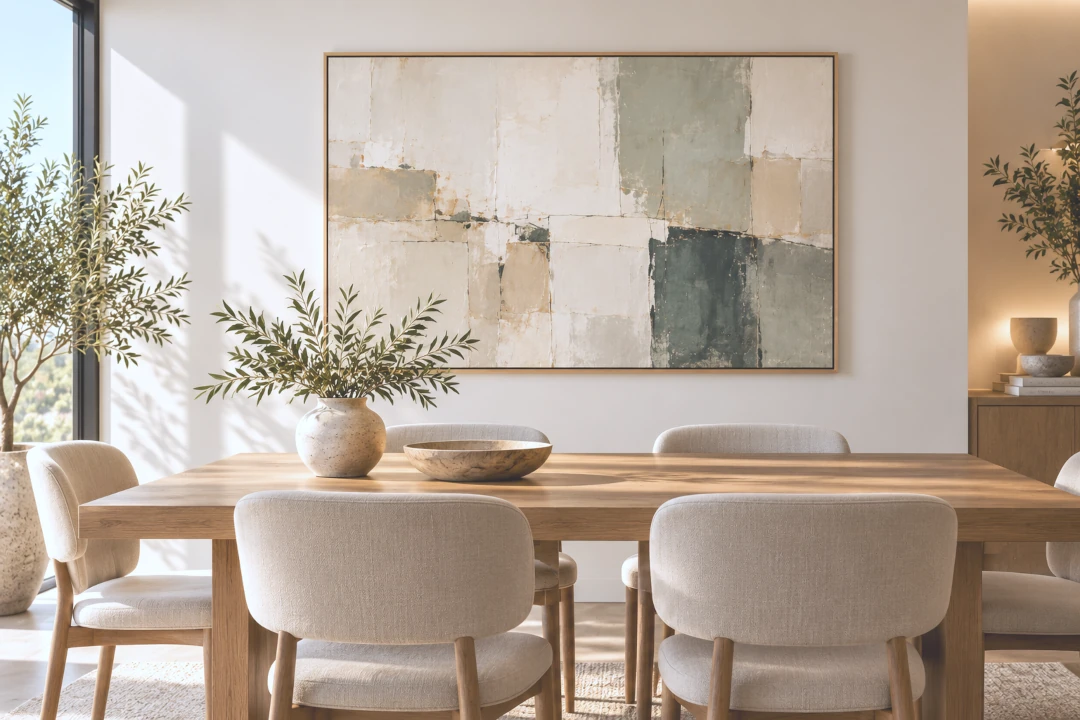
Dining Room Wall Art Mockup: Present Your Art in Stylish Interiors
A dining room wall art mockup lets you show your artwork in a realistic interior without physically hanging the piece or arranging a photo shoot. For artists, it is an easy way to give viewers context and help them imagine how a painting, print, or other wall-based artwork could look in a finished home.
Dining rooms are especially useful for mockups because tables, chairs, sideboards, lighting, and architectural details provide familiar references for scale. They can also create elegant compositions where the artwork naturally becomes a focal point.
In this guide, we look at how to choose the right dining room, place artwork convincingly, keep proportions realistic, use frames and mats, and create professional images for your portfolio, website, social media, and online promotion.
What Is a Dining Room Wall Art Mockup?
A dining room wall art mockup is a digital presentation that places an image of your artwork on a wall inside a dining room interior. Instead of installing the original piece in a real space, you create the presentation digitally.
This allows you to try the same artwork in different rooms and see how its scale, colors, proportions, and overall presence work with furniture and decor.
For artists promoting work online, a room mockup can complement a clean artwork photograph by showing the piece in context.
Why Use a Dining Room Art Mockup?
Dining rooms often have clear wall areas and strong visual anchors such as dining tables, chairs, pendant lights, and sideboards. These elements make it easier for viewers to understand the approximate scale and impact of an artwork.
A dining room can also communicate a different mood from a bedroom, office, or living room. Depending on the interior, it can feel intimate, sophisticated, minimalist, colorful, or relaxed.
That makes dining room mockups useful when you want to show potential buyers more than one possible setting for the same piece.
Start With a High-Quality Artwork Image
Before creating a mockup, make sure the source image represents the artwork accurately. Photograph it straight on, use even lighting, avoid glare, and check that the colors are close to the original.
Crop the image carefully and preserve the true proportions of the piece. A realistic interior cannot compensate for a distorted or poorly photographed artwork.
For more practical guidance, see our guide on how to photograph artwork.
Choose a Dining Room That Complements Your Art
The interior should support the artwork rather than compete with it. Consider the palette, visual weight, style, and proportions of your piece when choosing a room.
Bold contemporary art may stand out beautifully against a quiet neutral wall, while softer or more organic work may suit interiors with natural wood, stone, linen, and warm light.
Try more than one setting when possible. Seeing the artwork in several dining rooms can help you discover which environments make it feel strongest.
Wall Art Above a Dining Table
Placing artwork above a dining table is a classic composition because the furniture creates a clear visual relationship with the piece.
Keep enough space between the table and the artwork so the wall does not feel crowded. At the same time, avoid positioning the piece so high that it feels disconnected from the furniture below.
Horizontal artworks often work naturally above longer tables, while vertical pieces can suit narrower walls or compositions where the table is viewed from an angle.
Artwork Above a Sideboard or Credenza
A sideboard can provide another strong anchor for a dining room mockup. It creates a defined area of wall and gives the viewer an immediate reference for scale.
A single large artwork can become the focal point above the furniture, while smaller works may suit a more compact presentation.
Keep decorative objects on the sideboard relatively restrained so they do not distract from the artwork.
Large Dining Room Wall Art Mockups
Large artworks can be difficult to understand from an isolated image. A dining room mockup helps communicate how much visual presence a large canvas or print can have in a real interior.
Choose a scene with enough uninterrupted wall space and recognizable furniture. The dining table, chairs, doors, and lighting can all provide useful scale references.
If the artwork is for sale, always provide its actual dimensions alongside contextual images so buyers can compare the mockup with accurate measurements.
Framed Art in a Dining Room
A frame can help connect an artwork with the materials and architecture of a dining room. Wood frames may echo furniture, while black, white, or metal frames can create stronger contrast.
InsituArtRoom lets artists experiment with frames and mats while creating interior presentations, making it easier to compare different looks before choosing a final version.
The frame should enhance the presentation without becoming more visually dominant than the artwork itself.
Create a Dining Room Wall Art Mockup
Upload your artwork to InsituArtRoom and see it in realistic dining room interiors. Explore different spaces, adjust scale and placement, add frames and mats, and create polished visuals without staging a physical photo shoot.
Try InsituArtRoomModern Dining Room Art Mockups
Modern dining rooms often combine simple furniture, open wall space, and clean architectural lines. This can create an effective backdrop for contemporary artwork.
Abstract, geometric, minimalist, photographic, and colorful pieces can all work well when the room gives them enough visual space.
Natural materials, plants, soft textiles, and daylight can keep a modern interior from feeling too stark while allowing the art to remain the main focus.
Minimalist Dining Room Wall Art Mockups
A minimalist dining room can be especially useful when you want the artwork to dominate the composition. Fewer decorative elements mean less competition for the viewer's attention.
Use enough furniture and context to make the room believable, but avoid filling every surface or wall with objects.
This type of presentation can work particularly well for portfolios, online shops, and social media, where the artwork needs to remain recognizable even at smaller sizes.
Luxury Dining Room Art Mockups
A refined dining room can help present artwork in a more elevated context, especially when the piece is large, highly detailed, or positioned as a statement work.
Look for interiors where materials, lighting, and furniture feel cohesive rather than overly decorative. Marble, wood, textured fabrics, sculptural lighting, and carefully chosen accessories can create atmosphere without overpowering the art.
The goal is not to make the room look expensive for its own sake. It is to create a believable environment in which the artwork feels intentional.
Match the Interior to the Artwork
The same artwork can feel completely different in a warm Mediterranean dining room, a Scandinavian interior, a minimalist apartment, or a contemporary luxury space.
Choose a setting that supports the character of the piece and the audience you want to reach. You do not need to use the same interior style for every artwork in your portfolio.
Testing different environments can also help you understand which colors and materials bring out particular qualities in your work.
Keep the Artwork as the Focal Point
Dining rooms naturally contain many objects: tables, chairs, pendant lights, tableware, plants, sideboards, and decorative pieces. Too many competing elements can make the artwork disappear into the scene.
Look at the mockup at thumbnail size. If your eye goes to the chandelier or furniture before the artwork, a quieter room or simpler composition may work better.
The interior provides context. The artwork remains the subject.
Use Realistic Scale and Placement
One of the main benefits of a mockup is that it helps viewers understand scale, so accuracy matters.
Keep the artwork's original proportions and consider its real dimensions when positioning it relative to tables, chairs, doors, sideboards, and other familiar objects.
A small painting should not be enlarged until it looks like an oversized canvas. A believable presentation builds more trust and gives viewers more useful information.
Dining Room Mockups for Your Artist Website
Contextual images can add variety to an artist website and help visitors imagine a work outside the studio. They can sit alongside clean artwork photographs, detail shots, dimensions, medium, and other important information.
You might use a dining room presentation on a portfolio page, in a blog article, or as an additional visual for a work that is available for sale.
Keep a clean image of the artwork available as the primary reference so viewers can examine the piece without the surrounding interior.
Dining Room Art Mockups for Social Media
A room mockup gives you another way to share the same artwork without repeatedly posting the identical isolated image.
You can alternate between dining room scenes, living rooms, offices, clean artwork images, details, and video content. This creates more visual variety while keeping the artwork itself at the center of your content.
For more ideas on presenting your work online, see our guide to Instagram for artists.
Dining Room Mockups for an Art Portfolio
A portfolio should usually lead with clear documentation of the artwork, but selected room presentations can provide useful context and demonstrate scale.
For example, a large horizontal painting could first appear on its own and then above a dining table. The two images communicate different information while keeping the artwork consistent.
For more guidance, read our guide on how to make an art portfolio.
Dining Room Mockups for Selling Art Online
Online buyers cannot immediately see an artwork in their own home. A realistic dining room presentation can help them imagine how the piece might relate to furniture, wall space, and the overall scale of a room.
Use mockups alongside accurate photographs, dimensions, medium, framing information, price, and a useful artwork description. Contextual images should support those details rather than replace them.
For more ideas about presenting work to buyers, see how to sell art online.
Compare Dining Room and Living Room Mockups
Different rooms communicate different possibilities. A dining room may emphasize the relationship between artwork and a table or sideboard, while a living room can show how a piece works above a sofa or in a larger seating area.
Using both can give viewers a broader sense of how versatile the artwork may be without changing the artwork itself.
For another residential presentation, see our guide to creating a living room wall art mockup.
Common Dining Room Wall Art Mockup Mistakes
- Making the artwork unrealistically large or small
- Stretching or changing the artwork's proportions
- Choosing an interior that competes with the artwork
- Placing the artwork too high above the table or sideboard
- Using a frame that overwhelms the piece
- Adding too many decorative objects around the artwork
- Showing only styled mockups and no clean artwork image
- Starting with a low-quality or distorted artwork photograph
How to Create a Dining Room Wall Art Mockup With InsituArtRoom
- Start with a clear digital image of your artwork.
- Upload your artwork to InsituArtRoom.
- Choose a dining room interior that complements the piece.
- Adjust the artwork's size and position while keeping its proportions accurate.
- Try frames or mats if they suit the presentation.
- Check that the scale and placement look believable.
- Create the presentation for your website, portfolio, social media, or promotional material.
InsituArtRoom gives artists access to more than 1,500 interiors, making it possible to compare different dining rooms and other spaces instead of relying on one generic scene. You can also create Reels and use augmented reality to give viewers additional ways to experience your artwork.
See Your Artwork in a Dining Room
Turn a clean artwork image into a realistic interior presentation with InsituArtRoom. Compare rooms, test scale and placement, add frames and mats, and create professional visuals for promoting your art online.
Create Your Art MockupFinal Thoughts
A strong dining room wall art mockup can help viewers understand the scale, style, and presence of your artwork while imagining it in a real home.
Start with an accurate artwork image, choose an interior that supports the piece, keep the proportions believable, and make sure the artwork remains the focal point. Used alongside clean documentation images, dining room mockups can become useful material for portfolios, websites, social media, and online sales.
And because the presentation is digital, you can explore the same artwork in many different interiors without moving the physical piece at all.