Where to Sell Art Online: A Guide for Artists
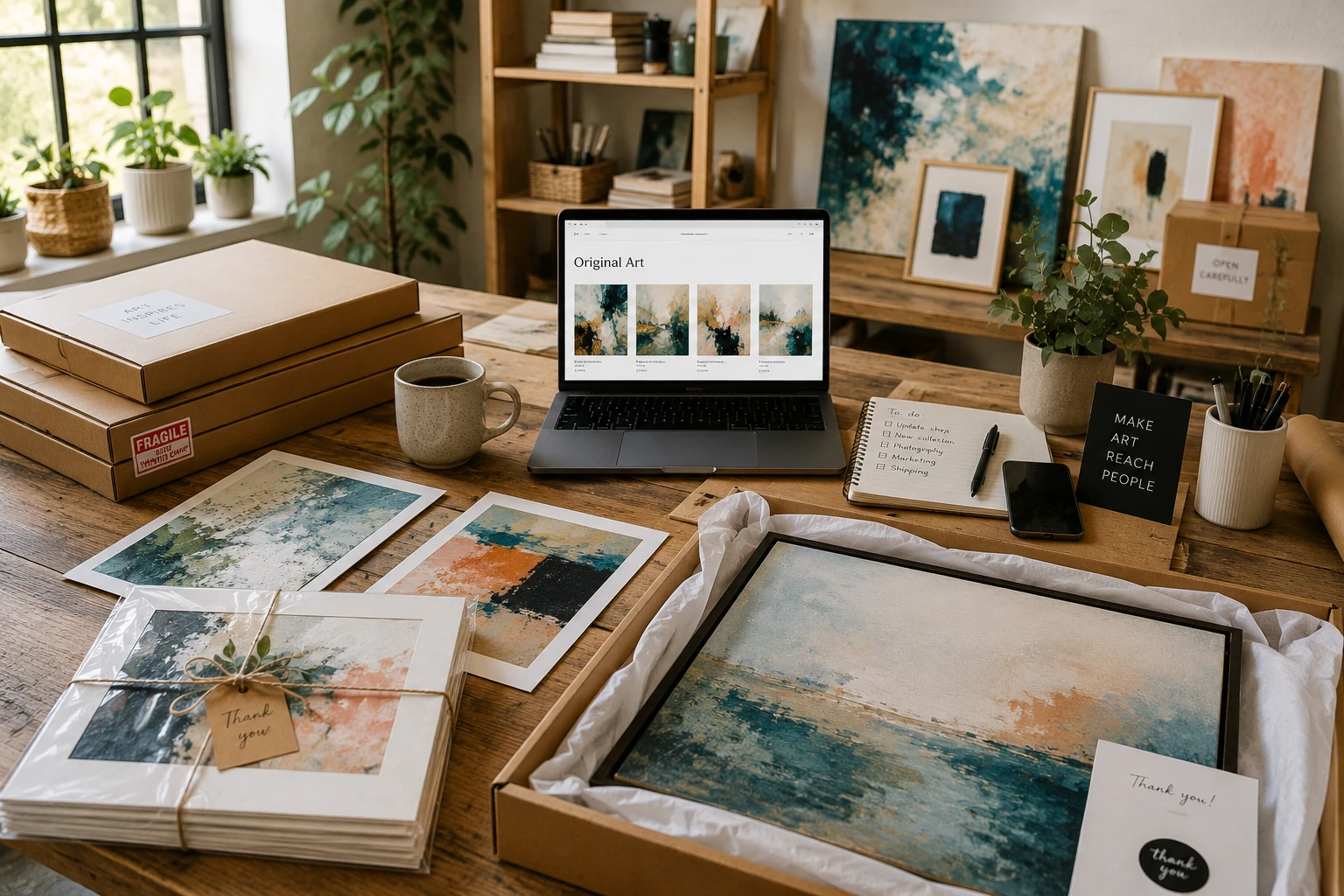
If you are wondering where to sell art online, you have more options than ever. Artists can sell directly through their own websites, use online art marketplaces, build shops on e-commerce platforms, reach buyers through social media, or sell reproductions through print-on-demand services.
The challenge is deciding which approach makes the most sense for your artwork and your audience.
There is no single platform that is perfect for every artist. The best place to sell your art depends on what you sell, how much control you want, how established your audience is, and how you prefer to manage the business side of your work.
1. Sell Art Through Your Own Artist Website
Your own website gives you the greatest control over how your artwork is presented and how buyers experience your brand.
You can decide how collections are organized, how artwork is photographed, what information buyers see, and how the purchasing experience works.
Advantages of selling through your own website include:
- More control over your brand and presentation
- Direct relationships with collectors
- Freedom to organize artwork and collections your way
- Ability to build an email list
- Less dependence on a marketplace's algorithm
- Potential to build long-term search engine traffic
The main challenge is traffic. Unlike a marketplace, your website does not automatically come with an audience. You need to attract visitors through search engines, social media, email, exhibitions, referrals, and other marketing channels.
2. Sell Through Online Art Marketplaces
Online art marketplaces bring artists and people looking for artwork together in one place.
Their biggest advantage is buyer intent. Someone browsing an art marketplace is already interested in discovering or purchasing art.
Marketplaces can be particularly useful for artists who do not yet have a large audience of their own.
Before choosing one, compare:
- Commission and listing fees
- What types of artwork are accepted
- How much control you have over pricing
- Who handles payment
- Who is responsible for shipping
- How buyers discover artists
- Whether the platform fits your style and price range
Do not assume that simply listing artwork on a marketplace will automatically generate sales. Presentation and promotion still matter.
3. Use an E-Commerce Platform
E-commerce platforms can be a middle ground between a basic artist website and a third-party art marketplace.
They allow artists to create their own branded store while providing tools for products, payments, inventory, discounts, shipping, and order management.
This can work especially well if you sell several types of products, such as:
- Original artwork
- Fine art prints
- Limited editions
- Small studies
- Books or catalogs
- Other products based on your artwork
As with your own website, you remain responsible for attracting most of the traffic.
4. Sell Art Through Social Media
Social media is primarily a discovery and relationship-building channel, but it can also play an important role in selling art.
A potential collector may discover an artwork in a post or video, visit your profile, browse previous work, and then continue to your website or contact you directly.
This means your social profiles should make the next step easy.
- Include a clear link to your website or shop
- Identify artwork that is available
- Show different views and details
- Respond professionally to inquiries
- Keep important purchasing information easy to find
If attracting attention is currently the challenge, see our guide on how to promote artwork online.
5. Sell Art Prints Online
Original artwork is unique, which naturally limits the number of people who can own each piece. Prints give artists another way to make their work available at different price points.
You can produce and ship prints yourself or work with a printing or fulfillment service.
Artists commonly sell:
- Fine art giclée prints
- Limited edition prints
- Open edition prints
- Photography prints
- Canvas prints
- Posters
Prints can also introduce new collectors to your work who may not yet be ready to purchase an original.
6. Use Print-on-Demand Services
Print-on-demand can reduce the logistical work involved in selling reproductions.
Instead of keeping inventory, the product is generally produced after an order is placed. Depending on the service, printing, packaging, and shipping may all be handled for you.
This convenience comes with trade-offs. Artists generally have less control over production, packaging, customer experience, and profit margins than when fulfilling orders themselves.
Always order samples before offering products to buyers so you can evaluate print quality and color reproduction yourself.
7. Sell Digital Art Online
Artists who create digital work can also sell downloadable files, licenses, or digital editions depending on the nature of their work.
Digital products eliminate physical shipping, but artists should clearly explain what the buyer receives and what they are allowed to do with the file.
Product descriptions should make licensing and usage rights clear.
8. Sell Directly to Existing Collectors
One of the most valuable audiences an artist can build is a group of people who already know and appreciate their work.
Previous buyers, email subscribers, exhibition visitors, social followers, and people who have previously made inquiries can become future collectors.
This is why building relationships matters. A person who does not buy today may purchase a piece from a future collection.
Should You Sell Art in More Than One Place?
Often, yes. Different channels can serve different purposes.
For example:
- Your website can be your central portfolio and shop
- A marketplace can introduce your work to new buyers
- Social media can generate discovery
- Email can maintain relationships with interested collectors
- Print services can help you offer more affordable reproductions
The important thing is to keep information accurate across every channel, especially availability and pricing.
How to Present Your Art Wherever You Sell It
The selling platform matters, but presentation matters too.
Whether a buyer discovers your artwork on your website, an online marketplace, or social media, they still need enough visual information to understand the piece.
Use a strong front-facing image as the primary representation of the artwork, then add close-ups and contextual images where appropriate.
Showing the artwork inside a realistic room can help communicate scale and give buyers an idea of how the piece might work in a home or other interior.
With InsituArtRoom, artists can create realistic artwork mockups using curated interiors, accurate artwork dimensions, frames, mats, lighting, shadows, and other presentation options.
These images can be used across your website, online shop, marketplace listings, portfolio, and social media.
Where Is the Best Place to Sell Original Art Online?
There is no universal answer. For an established artist with an existing audience, selling directly through a personal website may offer the greatest control.
For an emerging artist who needs more exposure, an online art marketplace can provide access to people already browsing for artwork.
Many artists benefit from combining the two: use marketplaces and social media for discovery while building a website and audience that you control over the long term.
Where Should Beginners Sell Art Online?
Beginners do not need to launch on every platform simultaneously.
Start with one place where people can clearly see your available work and one or two channels for attracting visitors to it.
This makes it easier to learn what works without spreading your time across too many platforms.
Once you have a reliable process for photographing, pricing, listing, promoting, packaging, and shipping your artwork, you can expand.
What Should You Look for in an Online Art Selling Platform?
Before committing to any platform, consider more than its popularity.
- Does its audience match your artwork?
- What are the fees or commissions?
- Can you control your prices?
- How much control do you have over presentation?
- Who owns the customer relationship?
- How are payments handled?
- Who manages shipping and returns?
- Can buyers easily discover new artists?
The best platform is the one that fits your artwork, audience, business model, and goals.
Finding Buyers Is as Important as Choosing Where to Sell
Choosing a selling platform solves only one part of the problem. You still need people to see your artwork.
Search engines, social media, exhibitions, collaborations, email marketing, referrals, marketplaces, and previous collectors can all become sources of potential buyers.
If this is the part you are struggling with, read our guide on how to get more art buyers.
Final Thoughts
When deciding where to sell art online, avoid searching for one perfect platform.
Instead, think about the role each channel can play in your art business. Your own website gives you control. Marketplaces can provide discovery. Social media can build an audience. Email can strengthen relationships. Print services can expand what you offer.
Start with a manageable setup, present your artwork professionally, and expand into additional channels as you learn where your buyers are coming from.
And if you are just beginning the entire process, our guide to selling art online takes you through the essential steps from presentation and pricing to promotion and sales.
Make Your Art Stand Out Wherever You Sell
Show potential buyers how your artwork can look in beautiful interiors. Create realistic art mockups with accurate dimensions, custom frames, mats, lighting, and curated spaces for your website, marketplace listings, portfolio, and social media.
Discover InsituArtRoom