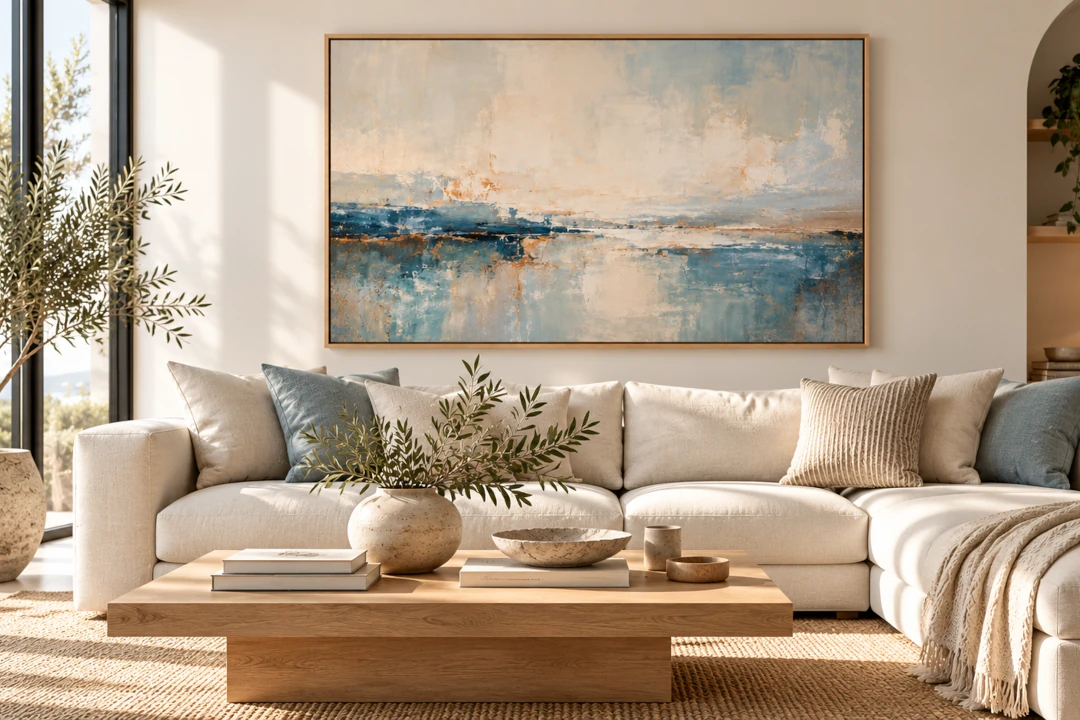
Living Room Wall Art Mockup: Show Your Art in Realistic Interiors
A living room wall art mockup lets you show your artwork in a realistic interior without physically hanging the piece, staging a room, or organizing a photo shoot. For artists presenting work online, it can be one of the simplest ways to give viewers a sense of scale, style, and context.
A clean image of the artwork is still essential. But when someone sees that same piece above a sofa, on a large living room wall, or inside a carefully chosen frame, it becomes easier to imagine the artwork in a real home.
In this guide, we look at how to create convincing living room art mockups, choose interiors that complement rather than overpower your work, and use mockups for portfolios, websites, social media, and online art sales.
What Is a Living Room Wall Art Mockup?
A living room wall art mockup is a visual presentation that places a digital image of an artwork onto a wall in a living room interior. Instead of photographing the physical artwork in that room, the artwork is added digitally to an existing interior scene.
The result can help communicate information that a plain artwork image cannot easily show: how large the piece feels on a wall, how it relates to furniture, and what kind of atmosphere it can create in a space.
For artists, this means one artwork can be presented in different interiors without transporting, hanging, and photographing it repeatedly.
Why Show Artwork in a Living Room?
The living room is one of the most useful settings for an art mockup because it contains familiar visual references. Sofas, side tables, lamps, shelving, and architectural details help viewers understand the artwork's proportions.
It is also a room where people commonly make prominent art choices. A large painting above a sofa or a statement piece on an open wall can become a focal point of the entire space.
For a potential collector browsing online, context can reduce some of the uncertainty involved in imagining an artwork away from the screen.
Start With a Good Image of Your Artwork
A realistic mockup starts with a clean digital image. Photograph the artwork straight on, use even lighting, avoid glare, and make sure the colors resemble the original as closely as possible.
Crop away unnecessary background so the edges of the artwork are clear. If the original photograph is distorted or poorly lit, placing it in a beautiful interior will not solve the underlying problem.
If you need help creating the source image, see our guide on how to photograph artwork.
Choose a Living Room That Fits the Artwork
The best interior is not necessarily the most dramatic one. The room should support the artwork rather than compete with it.
Consider the artwork's colors, proportions, visual weight, and overall character. A quiet minimalist painting may work beautifully in a restrained room, while a bold abstract piece may benefit from a larger wall and simpler surroundings.
It can also be useful to try the same artwork in several types of living rooms. Different presentations can help you discover which environment makes the work feel strongest.
Wall Art Above a Sofa
Placing artwork above a sofa is one of the most recognizable living room arrangements. It also gives the viewer an immediate reference for scale.
Pay attention to the relationship between the artwork and the furniture below it. If the artwork is shown extremely small over a wide sofa, it may lose visual impact. If it is unrealistically large, the mockup can become misleading.
Leave enough visual space between the sofa and artwork for the composition to breathe. The exact placement will depend on the proportions of both the room and the artwork, so use the overall balance of the scene rather than treating one rule as universal.
Large Wall Art Mockups
Large artworks can be difficult to communicate online because a standalone image gives few clues about physical size. A large wall art mockup can make that scale much easier to understand.
Choose an interior with enough uninterrupted wall space and recognizable furniture. A spacious living room can help show why a large canvas or statement painting has a different visual presence from a smaller work.
Always keep the representation credible. A contextual image should help viewers understand scale, not exaggerate it.
Vertical and Horizontal Artwork in Living Rooms
The proportions of the artwork should influence the room and wall you choose.
Horizontal artwork often works naturally above sofas, consoles, and other wide furniture. Vertical artwork can be effective on narrower walls, beside architectural features, or in spaces where the eye is drawn upward.
Rather than forcing every artwork into the same template, choose a composition that gives its proportions enough room.
Framed Art Mockups for Living Rooms
A frame changes how artwork relates to an interior. It can add contrast, create separation from the wall, or make the presentation feel more finished.
With InsituArtRoom, artists can experiment with frames and mats while creating interior presentations. This makes it possible to compare different treatments before deciding how you want to present the artwork online.
Keep the frame secondary to the art. A frame that is too visually dominant can distract from the piece it is meant to support.
Create a Living Room Wall Art Mockup
Upload your artwork to InsituArtRoom and see it in realistic living rooms and other interiors. Explore different settings, frames, mats, and presentation options without staging a physical photo shoot.
Try InsituArtRoomModern Living Room Art Mockups
Modern interiors are useful when you want a clean presentation with strong architectural lines and relatively little visual clutter. They can work particularly well for abstract, geometric, minimalist, and contemporary artwork.
However, "modern" does not have to mean completely neutral. Warm materials, textured fabrics, wood, stone, and carefully selected furniture can provide context while keeping attention on the wall.
Minimalist Living Room Wall Art Mockups
A minimalist living room can give the artwork more visual space. Fewer competing objects often make it easier for the viewer to focus on color, shape, texture, and composition.
This can be especially useful for portfolio images, social posts, and website banners where the artwork needs to remain immediately recognizable even at smaller screen sizes.
Minimal does not mean empty. A few carefully positioned objects can make the room believable while still allowing the art to dominate.
Match the Interior to Your Audience
Think about where your collectors might realistically imagine displaying your work. A luxury interior, a relaxed contemporary home, a colorful eclectic room, and a quiet Scandinavian-inspired space communicate very different moods.
You do not need to choose only one aesthetic for your entire portfolio. The goal is to find settings that feel plausible for each piece and consistent with the way you want to present your work.
Keep the Artwork as the Main Focus
One of the easiest mockup mistakes is choosing an interior that is more interesting than the artwork.
Busy patterns, strong wall decorations, excessive furniture, or dramatic objects close to the artwork can compete for attention. A beautiful interior is useful, but it is still the setting rather than the subject.
When reviewing a mockup, look at it at thumbnail size. If your eye goes first to the furniture instead of the artwork, consider trying a quieter room.
Use Realistic Scale
Scale is one of the biggest reasons to use a room mockup, so it should be handled carefully.
Use the artwork's actual proportions and, where possible, its real dimensions when judging how large it should appear relative to the room. Avoid stretching the image to fit a wall, as this changes the artwork itself.
If a mockup is being used to sell an original work, include the exact dimensions in the listing as well. The contextual image should support that information rather than replace it.
Should You Use More Than One Living Room Mockup?
Often, yes. One presentation might show the artwork above a sofa, while another uses a larger open wall or a different interior style.
Multiple mockups can be useful when promoting the same piece across different channels. They also give you more visual material for social media without requiring a new photograph of the physical artwork each time.
At the same time, avoid replacing every clean artwork image with styled interiors. Buyers and portfolio reviewers should still be able to see the artwork clearly on its own.
Living Room Mockups for Instagram and Social Media
Interior mockups are particularly useful for social media because they immediately place the artwork into a visual story. Instead of presenting the same isolated artwork repeatedly, you can vary the setting while keeping the work itself unchanged.
Use compositions that remain clear on a phone screen and make sure the artwork is large enough to be noticed quickly. You can also turn interior presentations into motion content rather than relying only on static posts.
InsituArtRoom includes tools for creating Reels from artwork presentations. For more ideas about reaching people through social platforms, read our guide to Instagram for artists.
Living Room Mockups for an Art Portfolio
A portfolio normally needs clear documentation images first, but selected contextual images can add useful variety and demonstrate how work functions at scale.
For example, you might show the clean artwork image followed by one carefully chosen living room presentation. This gives the viewer both an accurate view of the piece and an impression of its presence in a space.
See how to make an art portfolio for more guidance on selecting and organizing your work.
Living Room Mockups for Selling Art Online
When selling art online, a buyer cannot stand in front of the original before deciding whether to enquire or purchase. Good images therefore have to communicate more of the experience.
Use a clean artwork image as the primary reference, then add close-ups and contextual mockups where useful. Together, these can communicate appearance, texture, framing, proportions, and scale more effectively than a single image.
For a broader look at presenting and selling work digitally, read how to sell art online.
Common Living Room Art Mockup Mistakes
- Making the artwork unrealistically large or small
- Stretching or changing the artwork's proportions
- Choosing a room that competes with the artwork
- Placing the artwork too high or too low for the composition
- Using a frame that overwhelms the piece
- Showing only mockups and no clean image of the artwork
- Using the same interior for every artwork regardless of style or proportions
- Choosing low-quality source images of the artwork
How to Create a Living Room Wall Art Mockup With InsituArtRoom
- Start with a clear digital image of your artwork.
- Upload your artwork to InsituArtRoom.
- Choose a living room interior that complements the piece.
- Adjust the artwork's size and position while keeping its proportions accurate.
- Experiment with frames or mats if they suit the presentation.
- Check that the artwork remains the visual focus.
- Create your presentation and use it on your website, portfolio, social media, or promotional material.
InsituArtRoom gives artists access to more than 1,500 interiors, making it possible to test different environments instead of relying on a single generic room. You can also create Reels and use augmented reality to give viewers additional ways to experience your artwork.
See Your Artwork in a Living Room
Turn a clean artwork image into a realistic interior presentation with InsituArtRoom. Try different living rooms, compare styles, add frames and mats, and create visuals designed to help your artwork stand out online.
Create Your Art MockupFinal Thoughts
A strong living room wall art mockup does more than put a painting on a digital wall. It gives viewers context, helps communicate scale, and makes it easier to imagine the artwork as part of a real environment.
Start with an accurate image of your art, choose an interior that supports the piece, keep the scale believable, and make sure the artwork remains the focus. Used alongside clean documentation images, living room mockups can become valuable material for portfolios, websites, social media, and online sales.
And because the presentation is digital, you can explore many different interiors without moving the physical artwork at all.