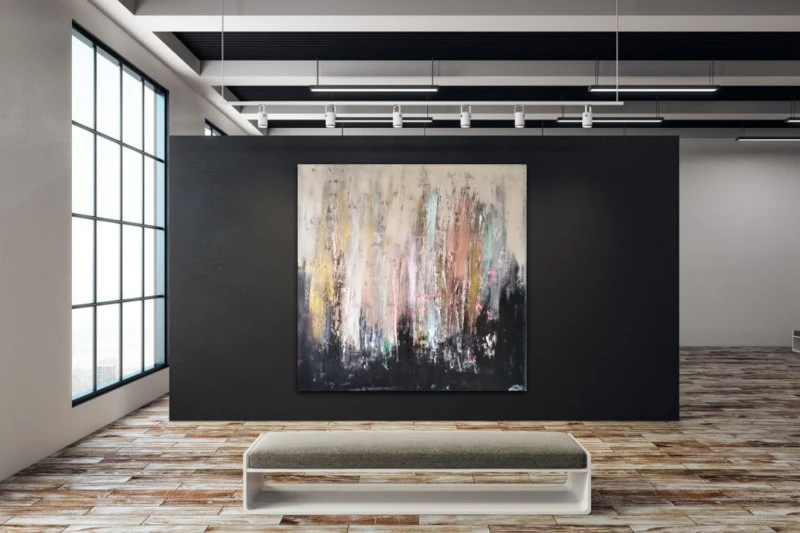
Virtual Art Gallery: How Artists Can Exhibit Art Online
A virtual art gallery gives artists another way to exhibit and present their work without relying only on a physical gallery space. An online exhibition can be viewed from different countries, remain accessible beyond a traditional opening night and connect visitors directly with information about each artwork.
But putting images on a webpage is not enough to create an engaging art experience. The way artwork is photographed, organised, described and shown in context can make a major difference to how viewers understand it online.
In this guide, we look at what virtual art galleries are, the different forms they can take, their advantages and limitations, and how artists can combine online exhibitions with realistic art mockups and augmented reality.
What Is a Virtual Art Gallery?
A virtual art gallery is a digital space where people can discover and view artworks online. The term can describe several experiences, from a simple curated exhibition page to a three-dimensional gallery that visitors navigate on a computer or mobile device.
Some virtual galleries reproduce the appearance of a physical exhibition space. Others are designed specifically for the web, using artwork images, artist information, descriptions, video and interactive features without trying to imitate a real building.
The important distinction is that the exhibition is accessible digitally. The viewer does not need to travel to the same physical location as the artwork.
Types of Online Art Exhibitions
Curated Online Exhibition Pages
This is one of the simplest formats. Artworks are organised around an artist, collection, theme or exhibition and presented with supporting information. It is easy to access and works well across devices when designed properly.
3D Virtual Galleries
A 3D gallery simulates movement through an exhibition environment. Visitors may navigate from wall to wall and select artworks to see more information.
Interactive Artwork Presentations
An exhibition can also combine artwork images with room mockups, video, audio, detail views or other interactive material. This approach can provide context without requiring a fully simulated 3D gallery.
Augmented Reality Experiences
Augmented reality takes a different approach: instead of placing the visitor inside a simulated gallery, it can help them visualise an artwork in their own physical environment.
Why Are Virtual Art Galleries Useful for Artists?
Physical exhibitions remain important, but digital presentation removes some geographic and scheduling limitations. An artist can share an online exhibition with collectors, followers, galleries and potential buyers wherever they are.
Potential advantages include:
- Access for viewers in different countries
- Longer availability than a short physical exhibition
- Easy sharing through websites, email and social media
- Space for artwork details, descriptions and artist information
- Opportunities to connect exhibition content with online sales
- Additional visual formats such as mockups, video and AR
- A way to present work between physical exhibitions
Virtual Galleries Can Expand Your Audience
A physical exhibition depends on people being able to reach a particular place during a particular period. Online presentation can remove that barrier.
This does not automatically mean that more people will discover the work. Artists still need promotion, search visibility, social media, email, gallery relationships or other ways of bringing viewers to the exhibition. But once someone discovers it, access is much easier.
If increasing visibility is one of your goals, see our guide on how to promote artwork online.
Online Art Exhibitions Need Strong Images
The quality of the digital experience depends heavily on the quality of the artwork images. Viewers cannot inspect the physical piece directly, so photographs need to communicate the work as accurately as possible.
Use straight, well-lit images with accurate colour and enough resolution to show the artwork clearly. Detail images can be useful for texture and materials, especially when the work has a physical surface that is difficult to understand from one full view.
For practical guidance, read how to photograph artwork.
Give Every Artwork Useful Information
An online exhibition should make it easy to understand what the viewer is looking at. Depending on the context, each artwork may include its title, artist, year, medium, dimensions, availability and a concise description.
A good description can provide context without explaining away the work. If you sell your art online, accurate information also helps potential buyers make a more informed decision.
See how to write an artwork description for a practical structure.
Show Artwork in Context
A flat artwork image is essential, but it does not always communicate physical scale. Showing selected works in realistic interiors can help viewers understand how a painting, photograph or print might relate to furniture, architecture and wall space.
This is where an art mockup tool can complement a virtual exhibition. The mockup provides context while the original artwork photograph remains the accurate reference image.
InsituArtRoom lets artists place their work into curated interiors, adjust the presentation and create visuals that can be used on websites, portfolios, social media and sales pages.
Present Your Art in Realistic Interiors
Create professional artwork mockups with InsituArtRoom and give online viewers another way to understand your work in context.
Try InsituArtRoomVirtual Art Gallery vs Art Mockup
A virtual gallery and an art mockup are not the same thing. A virtual gallery organises multiple works into a digital exhibition experience. An art mockup usually shows one artwork in a selected interior.
The two can work together. A virtual exhibition might use clean artwork images as its primary presentation and add contextual mockups to selected pieces to communicate scale and atmosphere.
For more ideas, see our guide to art mockups for artists.
How Augmented Reality Changes Online Art Viewing
One challenge of an online exhibition is the distance between the digital image and the viewer's own environment. Augmented reality can reduce that gap by allowing a person to visualise artwork in their space.
With InsituArtRoom's View in your room feature, artwork can be viewed on a real wall through AR. This is particularly useful when someone is considering how a piece might work with their own room, furniture and available wall space.
Read more about augmented reality for artists and how it differs from prepared room mockups.
Can a Virtual Gallery Help Sell Art?
It can support the sales process, but the exhibition itself is only one part of it. Potential buyers also need clear information about availability, dimensions, medium, price, shipping and how to purchase the work.
Make the path from viewing to enquiring or buying simple. If an artwork is for sale, avoid making interested viewers search through several pages to find out what to do next.
For the wider process, see how to sell art online and how to price your artwork.
Use Social Media to Bring People to the Exhibition
An online exhibition becomes more useful when you create content around it. Instead of posting the same artwork image repeatedly, you can share installation-style mockups, close-ups, behind-the-scenes material and short videos.
InsituArtRoom can also turn artwork presentations into Reels with motion effects. See how to make art Reels for Instagram for ideas on creating short-form content around your work.
Virtual Galleries and Artist Portfolios
A portfolio and a virtual exhibition have different purposes. A portfolio usually provides a broader, carefully selected overview of your practice. A virtual exhibition is often more focused, bringing a group of works together around a particular idea, period or collection.
Both benefit from consistent artwork information, strong photography and thoughtful sequencing. If you are organising your work professionally, see how to make an art portfolio.
Limitations of Virtual Art Galleries
Digital exhibitions have advantages, but they cannot reproduce every aspect of encountering physical art. Screen size, display settings and image quality affect what a viewer sees. Texture, material, depth and scale may also be difficult to communicate fully.
There are also practical limitations. Complex 3D experiences may load slowly or be awkward on some devices, while a visually impressive interface can still fail if navigation is confusing.
The goal should not necessarily be to reproduce a physical gallery perfectly. Instead, choose digital tools that make the artwork easier to discover, understand and explore.
How to Create a Better Virtual Art Exhibition
- Choose a clear concept. Decide why these works belong together.
- Edit the selection. More artwork does not automatically create a stronger exhibition.
- Use high-quality images. Make the work itself the priority.
- Add useful information. Include titles, media, dimensions and relevant context.
- Create a logical sequence. Think about how viewers move from one work to the next.
- Add context selectively. Use mockups, detail images, video or AR where they genuinely improve understanding.
- Make navigation simple. The technology should not distract from the art.
- Provide a clear next step. Make it easy to contact you, view your portfolio or purchase available work.
Should Artists Use 3D Virtual Galleries?
Not every artist needs a 3D gallery. If the experience is slow, complicated or difficult to use on a phone, a well-designed conventional exhibition page may serve viewers better.
Choose the format according to the work and the audience. A 3D environment can be effective when spatial relationships are important, while a clean image-led presentation may be better when viewers need to focus closely on individual works.
The Future of Online Art Exhibitions
The future is likely to involve several presentation formats working together rather than one format replacing all the others. Physical exhibitions, online viewing rooms, marketplaces, social media, realistic mockups and augmented reality each solve different problems.
For artists, the useful question is not whether digital exhibitions will replace physical galleries. It is how digital tools can extend the life and reach of an exhibition and make artwork easier to experience before someone encounters it in person.
Bring Your Artwork Into Real Spaces
Use InsituArtRoom to create realistic room presentations, promotional visuals and AR experiences that complement your online exhibition.
Create With InsituArtRoomVirtual Art Gallery Checklist
- Use a clear exhibition concept
- Select artworks carefully
- Photograph the work accurately
- Include titles, media and dimensions
- Write useful artwork descriptions
- Make the experience easy to navigate on mobile
- Use mockups to show selected works in context
- Consider AR when viewers need to visualise art in their own space
- Add clear contact or purchase information
- Promote the exhibition beyond the exhibition page itself
Final Thoughts
A virtual art gallery can give artists a flexible way to exhibit work online and reach people who cannot visit a physical show. Its value comes less from reproducing a gallery building on a screen and more from creating a clear, engaging way to experience the artwork digitally.
Strong photography, accurate information, thoughtful curation and simple navigation should come first. From there, tools such as realistic art mockups, video and augmented reality can add context and help viewers move from discovering an artwork to imagining it in the real world.