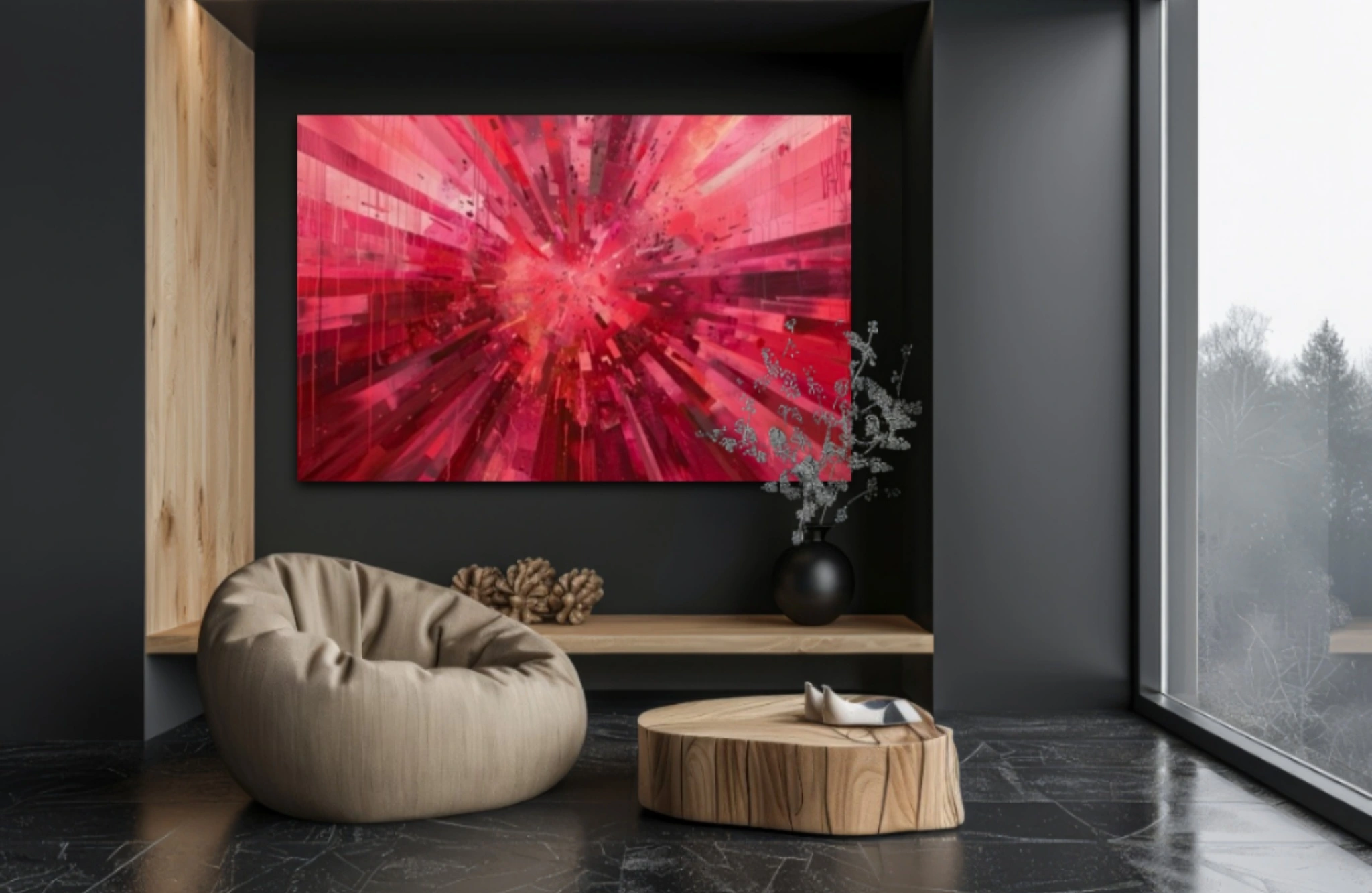
Room Mockup: How to Preview Artwork in a Room Before You Buy, Hang, or Sell It
A clean image of an artwork is essential when selling or presenting art online. But it does not always answer the questions buyers have before making a decision: How large will it look? Where could it hang? Will it work with furniture, colors, and the proportions of a real room?
A room mockup places artwork inside a complete interior scene so artists and buyers can see the piece in context. Instead of showing art against an empty background, it creates a more realistic reference for scale, placement, framing, and overall visual impact.
What Is a Room Mockup?
A room mockup is a visual preview that shows artwork displayed inside an interior. The scene may include furniture, lighting, architectural details, textiles, and decor, giving the viewer visual references that make the artwork easier to understand.
Room mockups are commonly used by artists to present work online, by galleries to create digital presentations, and by buyers who want a clearer idea of how a piece might look in a home or other space.
Why Room Mockups Are Useful for Artists
When potential buyers see only a flat image of an artwork, they have to imagine everything around it. A realistic interior removes some of that guesswork and can make an online presentation feel more complete.
- Show scale more clearly. Furniture and architectural elements provide useful size references.
- Create professional marketing images. One artwork can be presented in several interiors for websites, portfolios, social media, and online shops.
- Give artwork context. A room helps viewers imagine the piece as part of a real environment.
- Present different styles. The same artwork can be tested in modern, minimal, classic, colorful, or more neutral interiors.
- Help buyers visualize the result. Context can make it easier to understand how an artwork could function in a home.
Create a Room Mockup With InsituArtRoom
With InsituArtRoom, you can place your artwork in professionally designed interiors, adjust its size and position, and explore different presentation options without creating every scene manually.
You can start with 9 free interiors and unlock the full interior collection with Premium.
Room Mockup vs. Wall Mockup vs. Art Mockup
These terms are closely related, but they are not exactly the same.
Room mockup
A room mockup shows the artwork within a complete interior. Furniture, lighting, decor, and architecture help communicate scale and atmosphere.
Wall mockup
A wall mockup usually focuses more closely on the artwork and the wall around it. The scene may be simple, making it useful when you want fewer visual distractions.
Art mockup
Art mockup is the broader term. It can describe room mockups, wall mockups, framed artwork previews, flat lays, gallery scenes, and other ways of showing art in context.
For a broader overview, read our guide to creating realistic art mockups.
How Room Mockups Help Buyers Understand Artwork Size
Scale is one of the hardest things to judge online. Dimensions such as 50 × 70 cm or 24 × 36 inches are precise, but numbers alone do not always communicate how a piece will feel once it is on a wall.
A room provides familiar reference points. A sofa, dining table, bed, doorway, or console makes it easier to understand whether the artwork will read as a small accent, a medium-sized piece, or a large statement work.
When you use a room mockup to sell artwork, keep the displayed scale believable and include the actual dimensions in the product information.
Choose an Interior That Supports the Artwork
The room should help viewers notice the artwork, not compete with it. A visually busy piece may benefit from a quieter interior, while simpler artwork can often work well in a room with more texture or stronger design elements.
Consider the wall color, furniture, materials, lighting, and overall style of the scene. You do not need to match every color in the artwork. The goal is to create a believable setting that complements the piece.
Use Different Rooms for Different Types of Artwork
Testing the same artwork in several environments can reveal which presentation communicates it most effectively.
- Living rooms: useful for showing medium and large statement pieces above sofas or consoles.
- Bedrooms: work well for softer, calmer, or more intimate presentations.
- Dining rooms: provide strong furniture references for scale and placement.
- Offices: can give artwork a professional or contemporary context.
- Gallery-style spaces: keep the focus strongly on the artwork and work well for collections or series.
Frames, Mats, and Shadows Matter
A convincing room mockup depends on more than the interior itself. Framing and shadows influence how naturally the artwork sits within the scene.
Try different frame styles when appropriate, including metal or floating frames, and consider whether a cream mat improves the presentation. For frameless artwork, realistic shadows can help create separation between the artwork and the wall.
Keep these choices consistent with the artwork and the scene. The presentation should support the piece rather than become the main attraction.
How Artists Can Use Room Mockups Online
A strong room mockup can be reused across several parts of an artist's online presence.
- Online shops: combine a clean artwork image with one or more room previews.
- Artist websites: add context to portfolio and collection pages.
- Instagram and Pinterest: create varied visual content from the same artwork.
- Collector conversations: show how a piece might work at different scales or in different environments.
- Commissions: present concepts or completed pieces in a realistic setting.
- Digital presentations: create polished visuals for galleries, exhibitions, or client proposals.
Room Mockups for Buyers: Preview Before You Buy or Hang
Room mockups are also useful from the buyer's perspective. Seeing artwork in an interior can help with early decisions about size, orientation, framing, and placement.
For a more personal preview, augmented reality can take the process one step further by showing artwork on the buyer's own wall. A prepared room mockup and an AR preview serve different purposes: one provides a curated presentation, while the other helps visualize the artwork in a specific real space.
Learn more in our guide to previewing artwork on your wall before you buy or hang it.
How to Create a Room Mockup With InsituArtRoom
You do not need to photograph your artwork in multiple homes or build every room scene from scratch. A dedicated art mockup app can make the process much faster.
- Upload a clear image of your artwork.
- Choose an interior that complements the piece.
- Adjust the artwork's size and position.
- Choose a frame, mat, or frameless presentation when appropriate.
- Fine-tune the presentation so the artwork feels naturally placed in the room.
- Export the finished mockup for your website, shop, portfolio, or social media.
InsituArtRoom also allows you to display up to four artworks in one room, which is useful when presenting a series, diptych, triptych, or small collection.
Common Room Mockup Mistakes to Avoid
A mockup should make the artwork easier to understand. A few simple mistakes can have the opposite effect.
- Unrealistic scale: do not make a small artwork appear enormous just to create a dramatic image.
- Distorted proportions: keep the artwork's original aspect ratio.
- Overly busy interiors: too many competing elements can pull attention away from the art.
- Inconsistent lighting: the artwork should feel like it belongs in the scene.
- Misleading presentation: clearly state the actual artwork dimensions when selling.
A Room Mockup Is More Than Decoration
A realistic room mockup is not simply a decorative image for social media. It can help communicate information that is difficult to convey through a standalone artwork photo: scale, placement, framing, atmosphere, and the relationship between the piece and its surroundings.
For artists, that means stronger and more versatile presentation. For buyers, it means more context before deciding whether an artwork is right for their space.
Final Thoughts
When art is discovered and purchased online, viewers cannot stand in front of it or immediately see how it relates to a room. A well-made room mockup helps bridge that gap.
Use realistic scale, choose interiors that complement your work, keep the artwork as the focus, and combine room mockups with clear product images and accurate dimensions. Together, these elements create a more useful and professional way to present art online.