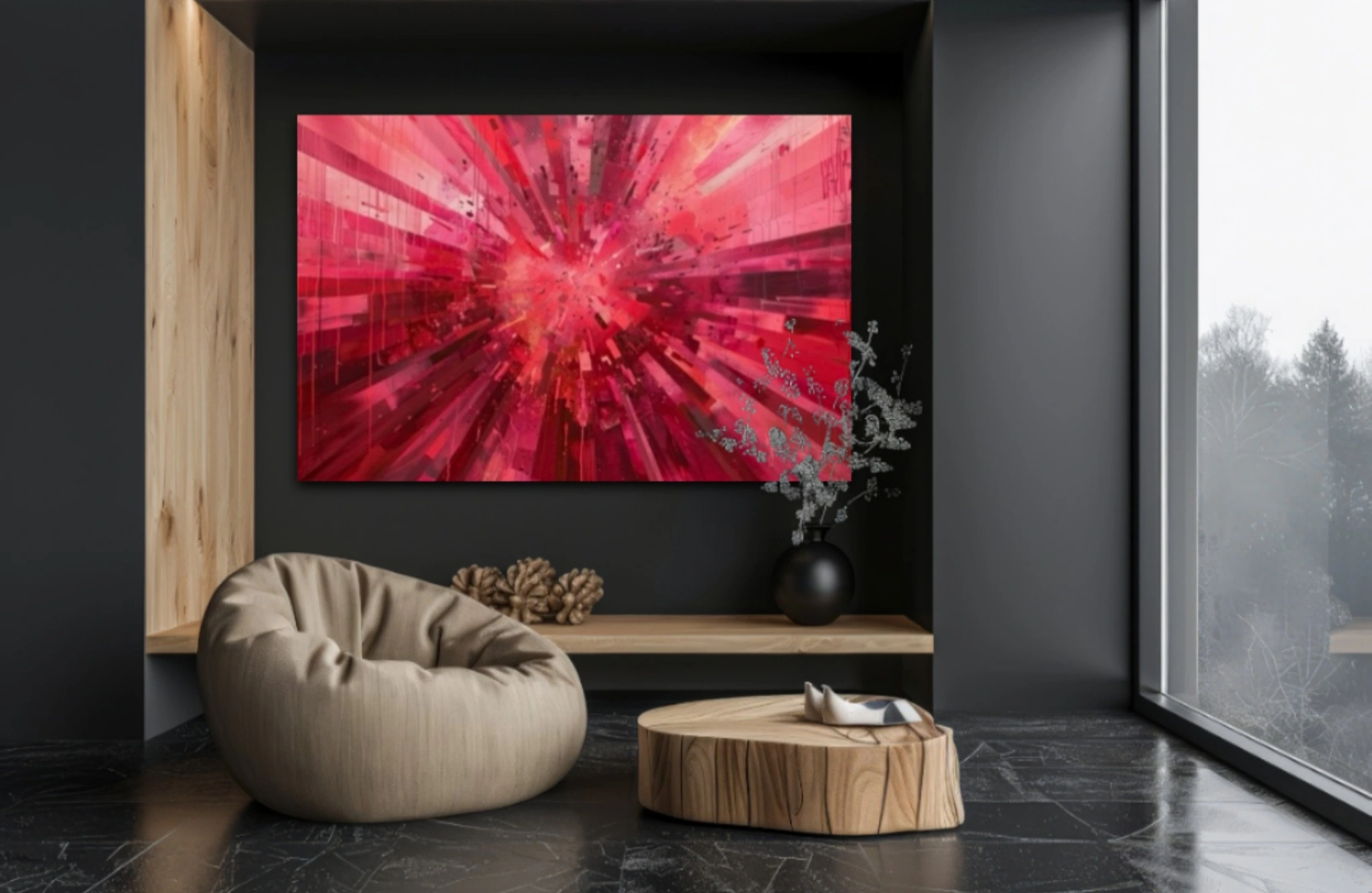
Art in Room Mockup: Simulate Your Artwork in Real Interiors
An art in room mockup shows artwork inside a realistic interior instead of presenting it only as an isolated image. For artists, this can make a major difference: viewers can understand the scale of the piece, imagine where it could hang and see how it interacts with a real environment.
Room mockups are useful for portfolios, online shops, social media, collector presentations and marketing. They can also save artists from repeatedly staging and photographing artwork in physical interiors.
What Is an Art in Room Mockup?
An art in room mockup is a visual representation of an artwork displayed on a wall in an interior. The room may be a living room, bedroom, office, dining room, gallery-style space or another environment that suits the artwork.
Unlike a simple photograph of the artwork alone, a room mockup provides context. Furniture, architecture and surrounding objects give the viewer visual references that make it easier to understand the artwork's proportions and presence.
Why Show Artwork in an Interior?
When someone discovers art online, they cannot stand in front of the original piece. They may know its dimensions, but dimensions alone do not always communicate how large or small a work will feel on a wall.
A realistic interior presentation can help viewers:
- Understand the approximate scale of the artwork
- Imagine the piece in a home, office or other space
- See how different framing options affect the presentation
- Compare portrait, landscape and square formats
- Visualise the mood created by the artwork and its surroundings
How Artists Use Room Mockups
A good mockup can be reused across several parts of an artist's business. Instead of treating it as a decorative image, think of it as a presentation tool.
Online Art Listings
Use a clear image of the artwork as the primary reference, then add a room mockup to provide context. This allows potential buyers to see both the work itself and an example of how it might look when displayed.
Art Portfolios
Room presentations can add variety to a portfolio, particularly when physical installation photographs are not available. For more ideas, see our guide to how to make an art portfolio.
Social Media
Showing the same artwork in different settings gives you additional content without requiring a new artwork for every post. You can also combine still mockups with art Reels for social media.
Collector and Client Presentations
A mockup can help when discussing scale, placement or framing with a potential buyer. It gives the conversation a visual starting point rather than relying only on measurements.
How to Create an Art in Room Mockup
The process is straightforward, but realism depends on a few important choices.
- Start with a good image of your artwork. Photograph or scan the piece clearly and crop it accurately.
- Choose an interior. Select a room that supports the artwork rather than distracting from it.
- Place the artwork on the wall. Position it where a real artwork would naturally hang.
- Adjust the scale. Use the furniture and architecture as visual references.
- Choose a frame if needed. The frame should suit both the artwork and the presentation.
- Check perspective and placement. If the wall is angled, the artwork should follow that plane naturally.
- Export the finished presentation. Use it in your portfolio, shop, social media or marketing.
Create Room Mockups With InsituArtRoom
InsituArtRoom is designed specifically for presenting artwork in interiors. You can add your artwork, choose from prepared rooms, adjust its size and position, select framing options and create finished visuals without manually building the scene in complex design software.
There are 9 interiors available for free, while Premium provides access to the wider interior collection and additional options for artists who create presentations regularly.
Simulate Your Artwork in an Interior
Place your artwork in realistic rooms and create professional visuals for your portfolio, social media and online art listings.
Try InsituArtRoomChoose a Room That Matches the Artwork
The interior should support the piece rather than become the main subject. A highly detailed artwork may benefit from a cleaner wall, while a bold minimal piece can work well in a more expressive environment.
Think about the audience too. If you are presenting work intended for residential collectors, a living room or dining room may provide useful context. For corporate work, an office environment may make more sense.
You can explore specific examples in our guides to living room wall art mockups, office wall art mockups and dining room wall art mockups.
Get the Artwork Scale Right
Scale is one of the most important parts of a believable room mockup. If the artwork is unrealistically large or tiny compared with the furniture, viewers may form the wrong impression of the piece.
Use recognisable objects in the room as references and keep the artwork's proportions consistent. If you know the real dimensions, use them as your guide rather than resizing the piece only according to what looks dramatic.
Pay Attention to Perspective
Artwork displayed on a wall viewed straight on is relatively simple. Angled walls require more care because the artwork needs to follow the perspective of the surface.
When perspective, scale and placement work together, the mockup feels much more natural. Our guide to realistic art mockups with perspective and scale explains this in more detail.
Use Frames Carefully
Framing can change the character of the presentation. A minimal frame may keep attention on the artwork, while a wider frame or mat can change its overall visual size.
Choose a frame that makes sense for the work you are showing. If the original artwork will be sold unframed, make that clear to potential buyers rather than allowing the mockup to create the wrong expectation.
Art Mockup vs. Augmented Reality
A room mockup and augmented reality solve different problems. A mockup gives the artist control over a polished presentation in a selected interior. Augmented reality allows a viewer to visualise artwork in their own real space.
InsituArtRoom's View in your room feature can therefore complement room mockups. An artist can use a curated mockup for marketing, while a potential collector can use AR to see how the artwork might look on a particular wall.
Learn more in our guide to augmented reality for artists.
Use Room Mockups to Support Art Sales
A mockup cannot guarantee a sale, but it can remove some of the uncertainty involved in buying art online. It gives potential buyers more visual information and helps them imagine the artwork outside the context of a product page.
For artists building an online sales strategy, room presentations work best alongside accurate photographs, clear dimensions, useful artwork descriptions and transparent pricing. See our guides to selling art online and pricing your artwork.
Common Art Mockup Mistakes
- Making the artwork unrealistically large. Dramatic scale may look impressive but can mislead viewers.
- Choosing an interior that competes with the art. The artwork should remain the focal point.
- Ignoring perspective. Artwork should sit naturally on the wall plane.
- Using a poor source image. A blurry or badly lit artwork photograph will weaken the final result.
- Using the same room for every piece. Varying interiors can help different artworks feel appropriately presented.
- Presenting a mockup as a real installation photograph. Use mockups as visualisations rather than creating confusion about where the work has physically been exhibited.
Photograph Your Artwork Well Before Creating a Mockup
The quality of the final room presentation depends heavily on the artwork image you start with. Photograph the piece straight on, use even lighting and avoid reflections or strong colour casts whenever possible.
For a complete workflow, read how to photograph artwork.
Turn One Artwork Into More Marketing Content
Once you have a clean digital image of your work, you can create several types of presentation from it: a portfolio image, different room mockups, social media posts, vertical videos and buyer previews.
This makes it possible to market the same artwork in varied ways while keeping the artwork itself at the centre of the content.
Final Thoughts
An art in room mockup helps bridge the gap between seeing an artwork as a digital image and imagining it as a physical object in a real space. For artists, it is a practical way to communicate scale, create stronger presentation material and give potential collectors more context.
The most effective mockups are not necessarily the most elaborate. Start with a good artwork image, choose an appropriate interior, keep the scale believable and let the artwork remain the focus.
Create Your Next Art in Room Mockup
Use InsituArtRoom to simulate your artwork in realistic interiors and create polished visuals for your art business.
Explore InsituArtRoom