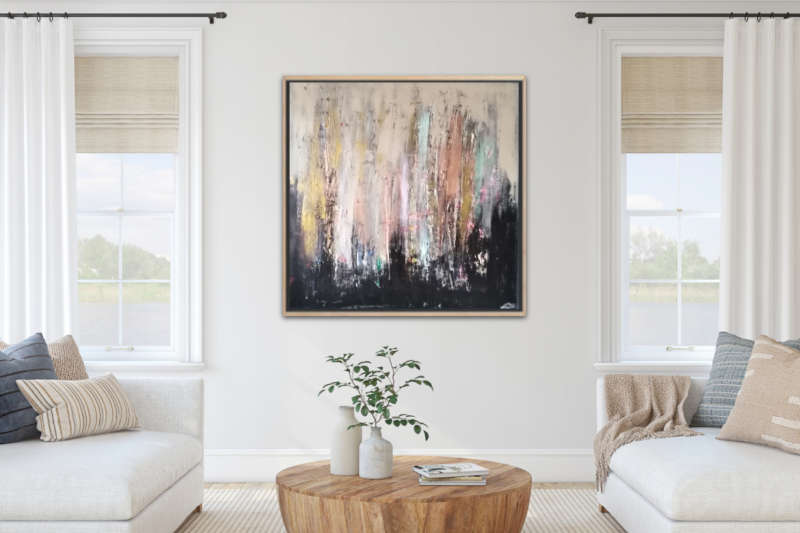
Art Preview: How Realistic Artwork Previews Help Artists Sell Online
Selling art online creates a challenge that does not exist in quite the same way in a physical gallery: buyers see the artwork on a screen, but they have to imagine what it will look like in a real room. An art preview helps bridge that gap by showing artwork in a realistic interior before it is purchased, printed, framed, or installed.
For artists, this is more than a presentation technique. A realistic artwork preview can communicate scale, strengthen an online portfolio, improve product listings, and give potential buyers more visual information before they make a decision.
What Is an Art Preview?
An art preview is a visual representation of an artwork displayed in a realistic setting, such as a living room, bedroom, office, gallery wall, or other interior. Instead of seeing only a flat image of the artwork, the viewer sees it in context.
That context helps answer questions that can be difficult to judge from an isolated image: How large will the artwork feel on a wall? How might it work above furniture? What type of frame suits it? Does the piece feel subtle or make a strong statement in a room?
Why Art Previews Matter When Selling Art Online
Online buyers cannot stand in front of an artwork, compare it with the dimensions of a wall, or immediately understand how much visual impact it will have in a space. A realistic preview gives them additional information without requiring them to rely entirely on imagination.
- Scale becomes easier to understand. Furniture and architectural details provide familiar visual references.
- The artwork gains context. Buyers can see how a piece may interact with an interior rather than viewing it in isolation.
- Presentation feels more professional. Strong visuals can improve portfolios, online shops, social media posts, and collector presentations.
- Buyer uncertainty can be reduced. A preview can help someone move from simply liking a piece to imagining it in a real space.
Art Preview vs. a Simple Artwork Image
A clean photograph or digital image of the artwork is still essential. It shows the piece clearly and allows viewers to focus on color, composition, texture, and detail.
An art preview serves a different purpose: it provides context. For online listings and portfolios, the strongest presentation will often include both—a clear image of the artwork itself and one or more realistic previews showing it in an interior.
Create realistic art previews with InsituArtRoom
With InsituArtRoom, artists can place their artwork in professionally styled interiors and create realistic mockups without complicated editing software.
Start with 9 free interiors, or access the full interior collection with Premium.
How Artists Can Use Art Previews
An artwork preview can be reused across many parts of an artist's online presence. Instead of creating a different visual from scratch for every platform, artists can build a consistent collection of images that show their work professionally.
- Online shops: add contextual images alongside the main artwork image.
- Artist websites: make portfolio pages more visual and help visitors understand scale.
- Instagram and Pinterest: create polished content that shows the artwork in different environments.
- Collector conversations: send a visual preview when someone wants to understand how a piece may look in a room.
- Commission proposals: help clients visualize the approximate scale and presentation of a proposed piece.
- Gallery or professional presentations: show how artworks could work in an installed setting.
For more ideas, see our guide to creating an artwork portfolio mockup.
How Art Previews Help Buyers Make Better Decisions
Buying original art or prints online often involves uncertainty. A buyer may love a piece but hesitate because they cannot picture its size or how it will work with the room around it.
A realistic preview makes some of those questions easier to explore. It does not guarantee that an artwork will look exactly the same in every home, but it provides a useful visual reference for proportion, framing, placement, and overall impact.
Use Realistic Scale
Scale is one of the most important parts of a convincing art preview. If a small artwork is shown as though it fills an enormous wall, the image may look impressive but can give the buyer the wrong impression.
Use the actual proportions of the artwork and keep its displayed size believable in relation to furniture, doors, ceilings, and other objects in the scene. If you sell the same design in several sizes, creating separate previews can help customers compare the options.
Choose an Interior That Supports the Artwork
The room should help present the art, not compete with it. A highly decorative interior may work beautifully for some pieces, while other artworks benefit from a quieter setting.
Consider color, architecture, furniture style, and the amount of visual detail in the scene. Using several different interiors can also show that an artwork is versatile without changing the artwork itself.
If you create mockups regularly, our wall art mockup generator guide explains what makes a realistic wall presentation effective.
Frames, Mats, and Shadows Make a Difference
Presentation details influence whether an artwork looks naturally integrated into a room. A suitable frame, realistic spacing, and subtle shadows can make the preview feel more believable.
InsituArtRoom gives artists different presentation options, including frames and frameless displays, so the same artwork can be tested in different styles before creating the final image.
Art Preview and Augmented Reality Are Not the Same Thing
An art preview usually places artwork inside a prepared interior image. It is ideal for creating portfolio images, shop listings, social media content, and marketing materials.
Augmented reality serves a different purpose. It can allow a viewer to visualize artwork on a wall in their own environment. The two approaches complement each other: curated previews are useful for presenting and marketing the artwork, while AR can give an individual buyer a more personal visualization experience.
Learn more in our guide to augmented reality for artists.
What Makes a Good Art Preview?
The most effective previews are usually the ones that feel believable and keep the artwork as the main focus.
- Use the correct artwork proportions.
- Keep the displayed size realistic.
- Choose interiors that complement rather than overpower the piece.
- Use frames and shadows consistently.
- Avoid stretching, cropping, or altering the artwork simply to fit the scene.
- Show more than one setting when it genuinely helps the buyer understand the piece.
How to Create an Art Preview with InsituArtRoom
InsituArtRoom is designed specifically to help artists present artwork in interiors without needing to build every mockup manually in Photoshop.
- Upload your artwork.
- Choose an interior that suits the piece.
- Adjust the artwork's size and position.
- Choose a frame or frameless presentation when appropriate.
- Fine-tune the presentation and export the finished visual for your portfolio, shop, or social media.
This makes it practical to create several presentation options for the same artwork and test which setting best supports the piece.
Art Preview as Part of a Stronger Online Sales Experience
An art preview should not replace accurate product information. Buyers still need dimensions, materials, technique, price, shipping details, and clear images of the artwork itself.
Instead, think of previews as one part of a complete presentation. The artwork image shows the piece. The description tells its story and provides details. The room preview communicates context and scale. Together, these elements make it easier for someone to understand what they are considering buying.
Final Thoughts
Art previews solve a simple but important problem in online art sales: they help people imagine artwork beyond the screen. For artists, they provide a flexible way to strengthen portfolios, listings, social media content, and buyer presentations. For potential buyers, they offer useful context about scale, placement, framing, and visual impact.
When the preview is realistic and the artwork remains the focus, visualization becomes more than decoration. It becomes a practical tool for presenting art clearly and helping buyers make a more informed decision.