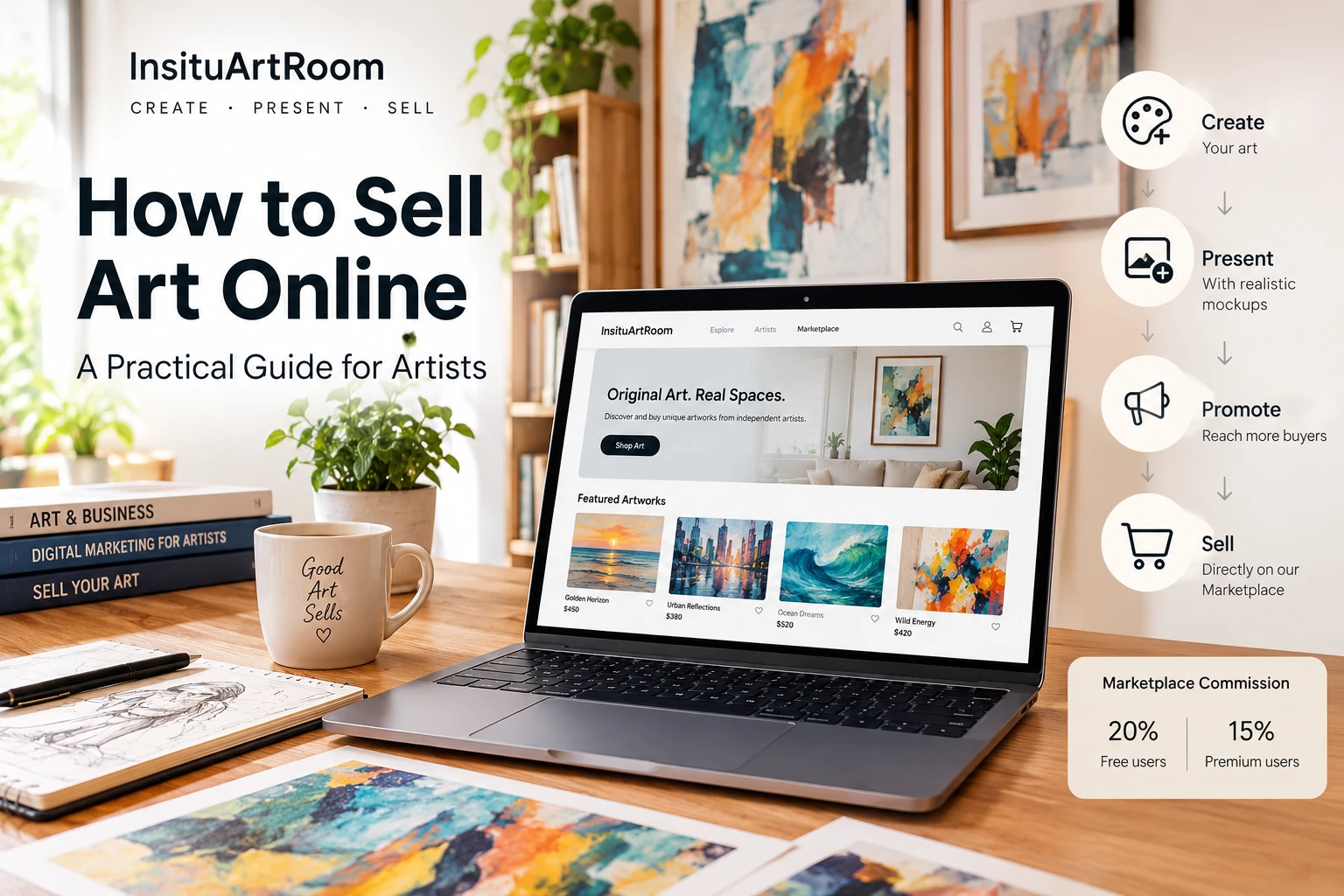
How to Sell Art Online: A Practical Guide for Artists
Learning how to sell art online is about much more than uploading an artwork and adding a price. Buyers need to discover your work, understand what makes it special, imagine how it could look in their space, and feel confident enough to purchase it.
The good news is that artists now have more ways than ever to reach collectors directly. With a strong presentation, clear pricing, the right promotional strategy, and an easy buying process, you can turn your online presence into a real sales channel.
With InsituArtRoom, artists can create realistic artwork presentations and also list original artworks for sale through the InsituArtRoom Marketplace, bringing presentation and selling together in one place.
Start With a Professional Presentation
Online buyers cannot stand in front of your artwork, examine its texture, or see its true scale in a gallery. Your images have to do much of that work for you.
Start with a clear, high-quality photograph of the actual artwork. The image should be sharp, well lit, and as accurate as possible in color and proportion.
Then add contextual images that show the artwork displayed in a realistic interior. This can make it much easier for potential buyers to understand how the piece could look in a home, office, or other space.
InsituArtRoom is designed specifically for this purpose. You can upload your artwork, enter its dimensions, place it inside realistic interiors, experiment with frames, and create professional presentation images in minutes.
You can learn more in our guide to art mockups for artists.
Show the Real Scale of Your Artwork
Size can be difficult to understand online. A small print and a large painting can look almost identical when both fill a phone or computer screen.
Showing artwork inside an interior gives buyers familiar visual references such as sofas, tables, beds, doors, and other furniture.
This helps communicate scale immediately and allows collectors to better imagine whether the artwork could work in their own space.
Create a Complete Artwork Listing
A buyer should not have to contact you simply to find basic information about a piece.
A strong artwork listing should normally include:
- Artwork title
- Artist name
- Medium and materials
- Dimensions
- Year created
- Whether the artwork is framed
- Whether it is an original or edition
- Price
- Shipping information
- Country the artwork ships from
You can also include a short description of the inspiration, process, or story behind the artwork when it adds useful context.
Use More Than One Image
One image is rarely enough for an original artwork sold online.
Consider including:
- A clear front-facing image of the artwork
- Close-up details
- Texture or surface details
- Edges or sides of the artwork
- The frame, when included
- One or more realistic interior mockups
The objective is to reduce uncertainty. The more confidently a collector understands what they are buying, the easier it becomes to make a decision.
Set a Clear and Consistent Price
Pricing artwork can feel difficult, especially for artists who are beginning to sell their work.
There is no single formula that works for every artist, but your pricing should make sense across your portfolio and remain reasonably consistent between the different places where you sell.
Consider your materials, size, time, experience, previous sales, demand, market position, packaging, shipping, and selling costs.
Avoid hiding the price unless you have a specific reason to do so. Online buyers are accustomed to seeing prices immediately, and forcing someone to request a price can create unnecessary friction.
Choose Where to Sell Your Art Online
Artists can sell through their own website, social media, galleries, online art platforms, and marketplaces.
Each option can play a different role. Your own website gives you control over your brand, social media can help people discover your work, and an art marketplace can give buyers a dedicated place to browse available pieces.
Our guide to where to sell art online explores these options in more detail.
Sell Your Art on InsituArtRoom Marketplace
InsituArtRoom combines artwork visualization with an online marketplace created for artists.
Instead of using one tool to create presentation images and another unrelated platform to sell your work, you can present your artwork in realistic interiors and make it available to buyers through the same InsituArtRoom ecosystem.
Artists can list original artworks for sale, add the relevant artwork information, set the artwork price, and make the work available to potential buyers.
When a buyer wants to purchase an artwork, the Marketplace provides a structured purchase process while the artist remains responsible for preparing and shipping the artwork.
Marketplace Commission for Artists
InsituArtRoom uses a straightforward commission structure for completed Marketplace sales:
- Free users pay 20% commission.
- Premium users pay 15% commission.
This gives Premium artists a lower Marketplace commission while also providing access to the complete Premium experience in InsituArtRoom.
The aim is simple: give artists one place to present, promote, and sell their artwork online.
Sell Your Artwork With InsituArtRoom
Create professional artwork presentations, list original work for sale, and connect your art with potential buyers through the InsituArtRoom Marketplace.
Explore InsituArtRoom MarketplacePromote Your Art, Not Just Your Shop
Listing an artwork online does not automatically bring buyers. People first need to discover your work.
Social media, your artist website, newsletters, Pinterest, exhibitions, collaborations, search engines, and online communities can all help create visibility.
Instead of posting only direct sales messages, share your artwork in different ways. Show details, your creative process, studio images, framed presentations, interiors, works in progress, and finished pieces.
Our guide on how to promote artwork covers more ideas for building visibility around your work.
Help Potential Buyers Imagine Owning the Artwork
One of the biggest differences between browsing art in person and browsing online is context.
In a gallery, viewers immediately see the artwork at its real scale in a physical environment. Online, that context disappears.
This is why realistic room presentations can be particularly valuable when selling art.
Try showing the same piece in several suitable interiors. A collector may connect more strongly with one presentation simply because it resembles the type of space they live in.
If you want to experiment before upgrading, InsituArtRoom includes 9 free interiors. Our free art mockup guide explains how to get started.
Build Trust With Buyers
Buying original art online requires trust.
Make sure your artist name, biography, portfolio, pricing, contact information, social profiles, and artwork details are presented consistently.
If you have exhibitions, previous sales, press mentions, testimonials, or photographs of your work in real collections, these can also help potential buyers feel more confident.
Clear communication matters as well. Respond professionally to genuine questions and be transparent about shipping, framing, condition, and other relevant details.
Make Buying as Simple as Possible
Every unnecessary step gives a potential buyer another opportunity to abandon the purchase.
Someone interested in an artwork should be able to quickly understand whether it is available, what it costs, where it ships from, and what happens after they decide to buy.
A structured marketplace purchase flow can make this much easier than managing every sale manually through direct messages.
Keep Promoting Artwork After You List It
An artwork may not sell the first time you share it.
Continue showing available pieces over time and create different visual presentations instead of repeating exactly the same post.
For example, one artwork can become a front-facing portfolio image, a close-up post, several room mockups, a framing comparison, a Reel, a Story, or a post about the inspiration behind the piece.
If finding collectors is your biggest challenge, read our guide on how to get more art buyers.
Final Thoughts
Learning how to sell art online is really about creating a complete path from discovery to purchase.
First, people need to notice your art. Then they need enough information and visual context to understand it. Finally, they need a simple and trustworthy way to buy it.
Strong artwork photography, realistic mockups, consistent pricing, regular promotion, and a clear purchasing process can all help.
With InsituArtRoom, you can create professional artwork presentations and take the next step by making original work available through the InsituArtRoom Marketplace.
Present Your Art. Promote It. Sell It.
Use InsituArtRoom to visualize your artwork in realistic interiors, create professional marketing images, and offer your original artwork to buyers through the Marketplace.
Start Selling With InsituArtRoom